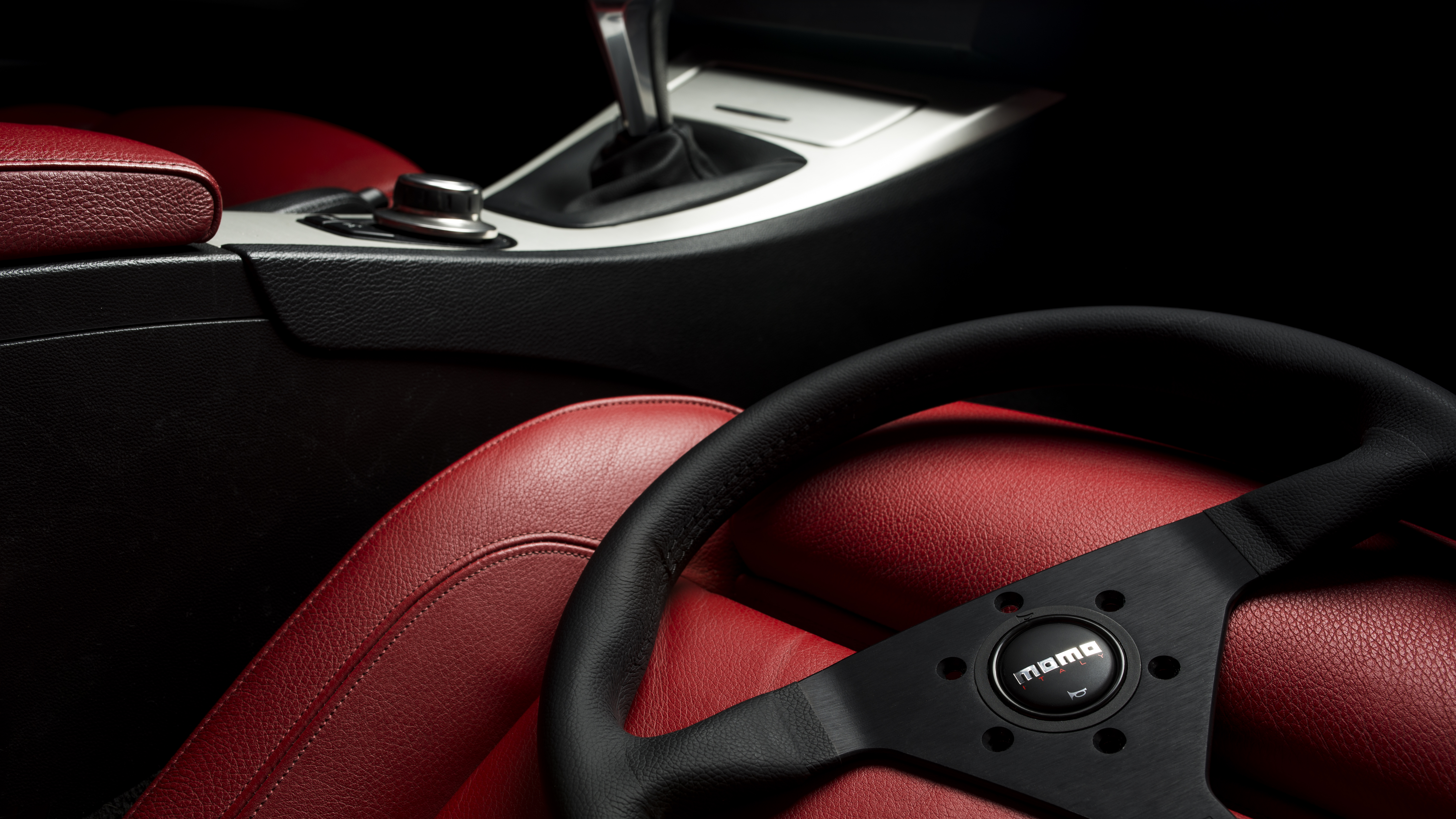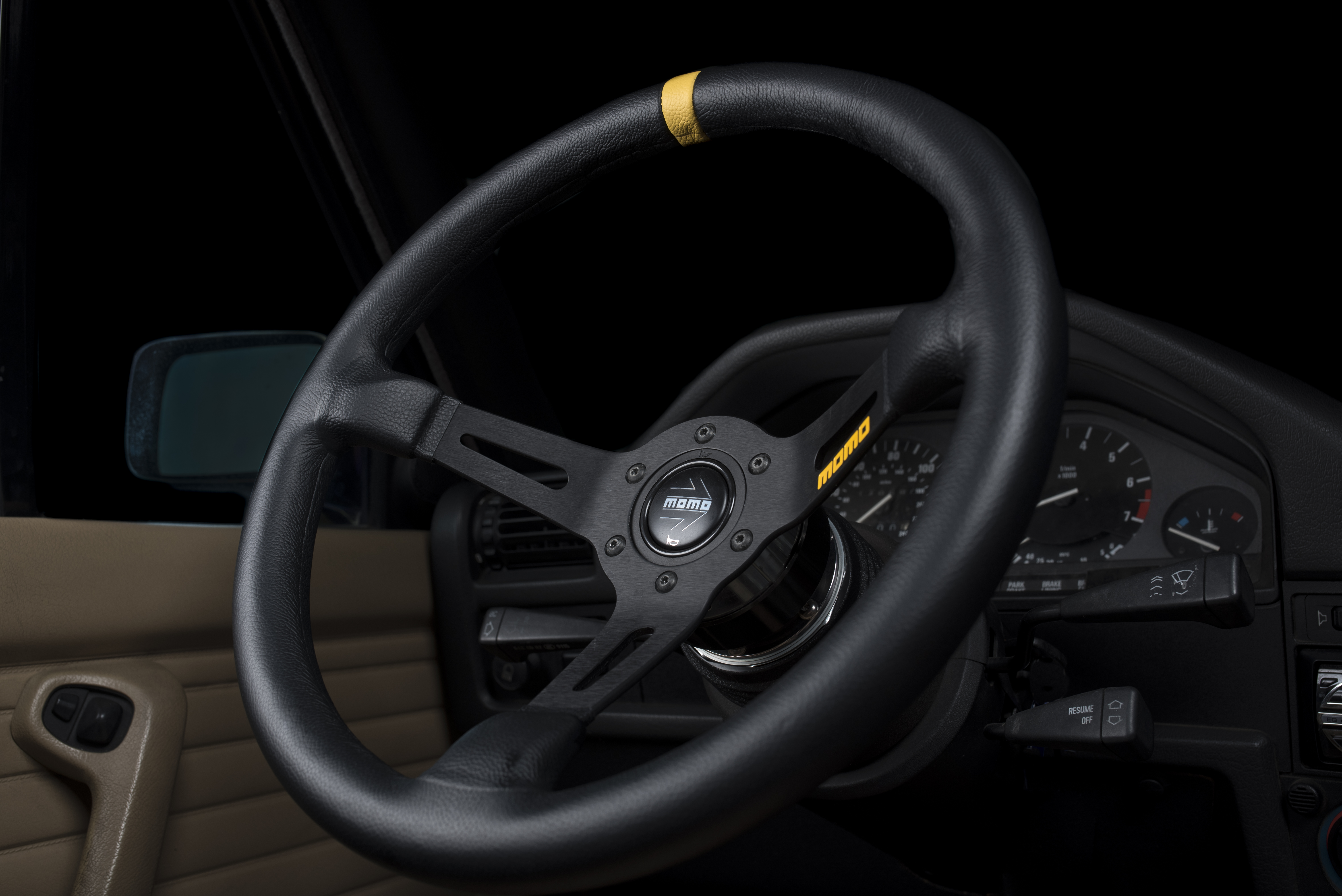
The most interaction you have with your car is at your feet with the pedals or in your hands with the steering wheel, shifter, and other controls you operate during your drive. Steering wheels offer distinctive driving experiences based on their feel, style, and design. Your factory BMW steering wheel is either a three or four spoke design with a range of diameters, materials, and grip thicknesses. The M Tech line of wheels that are factory options in non-M cars and standard in the M versions are BMW’s most sporty feeling wheels. Generally speaking, M Tech wheels are plenty engaging for the standard commuter looking for a motorsport-inspired steering wheel with all the modern functions and airbag that are expected of a luxury sports car. However, if you are interested in racing, the M Tech steering wheel may only work for your earliest track day sessions.
It is important that your wheel be the most comfortable one for you. There are many designs that are intended to give you options to pick your preference, and others styled around a certain type of driving. Common wheel types are a three-spoke or four-spoke design with a full circle wheel. These are excellent for use in anything from a street car to a track car as they are light, symmetrical across 360 degrees, and make it easy to maintain your hand positions. Another common type that has more recently been adopted by OE manufacturers is the D-shaped wheel. While there is some debate around the reason for the D-shape, its sole purpose is to make entry and exit from the car easy and to keep your hands in the 9 and 3 o’clock positions at all times. Some drivers prefer the D-shape, while others would rather have a full wheel and quick release hub for the same easy access. There are variations of each style of wheel that allow drivers to tailor their steering wheel to their liking, but they all derived from the original racing designs that have persisted to this day for good reason. Companies like MOMO and OMP both pioneered some of the features that are incredibly popular among performance drivers.
Looking at the history that brought us companies like MOMO and OMP gives drivers a clear understanding of the evolution our racing wheels underwent. The first racing cars and their components were cobbled together by the pioneers of the sport. The earliest cars used lever-like tillers to steer, but only those incredibly early 19th Century cars featured the design. Up until 1904, the tiller would be seen in many road and racing vehicles. Although the tiller was used all the way to 1904, the racing driver Alfred Vacheron is reportedly the earliest driver to favor the wheel. His use of a steering wheel in his Panhard for the 1894 Paris-Rouen race would become the first instance of its use in motorsports, and champions after his victories continued the preference of a wheel over a tiller.
The steering wheel has evolved in designs, sizes, and materials since those earliest wheels that replaced tillers. At an amateur level, they remain incredibly simple. A racing wheel should be quite specialized: it should give you an upright position in your seat, be a comfortable diameter to control the car quickly, it should allow ease of entry and exit from the car, it needs to feature excellent grip to keep your hands on the wheel during hard cornering, and it should just feel right to you as a driver. Everything after those factors is ancillary and probably not something you will find on anything short of a top-tier competitive racing vehicle. You should note that adopting a racing wheel on your road car will require forfeiture of conveniences like the airbag, steering wheel integrated controls, and your automatic indicator shut-off. If you choose to outfit a newer car that sees street time with a racing wheel, you may have to weigh those benefits and drawbacks carefully to ensure a racing wheel is right for your BMW.
For those interested in driving competitively, an exceptional grip is incredibly important. You want your hands to remain in place on the wheel at all times in order to maintain proper vehicle control. This means your wheel needs to be covered with a non-slip surface. For drivers who wear gloves, particularly leather gloves, a suede or Alcantara-wrapped wheel will offer the most possible grip. A leather-wrapped wheel will not offer as much grip for a driver who uses leather gloves as the two surfaces will slide against each other.
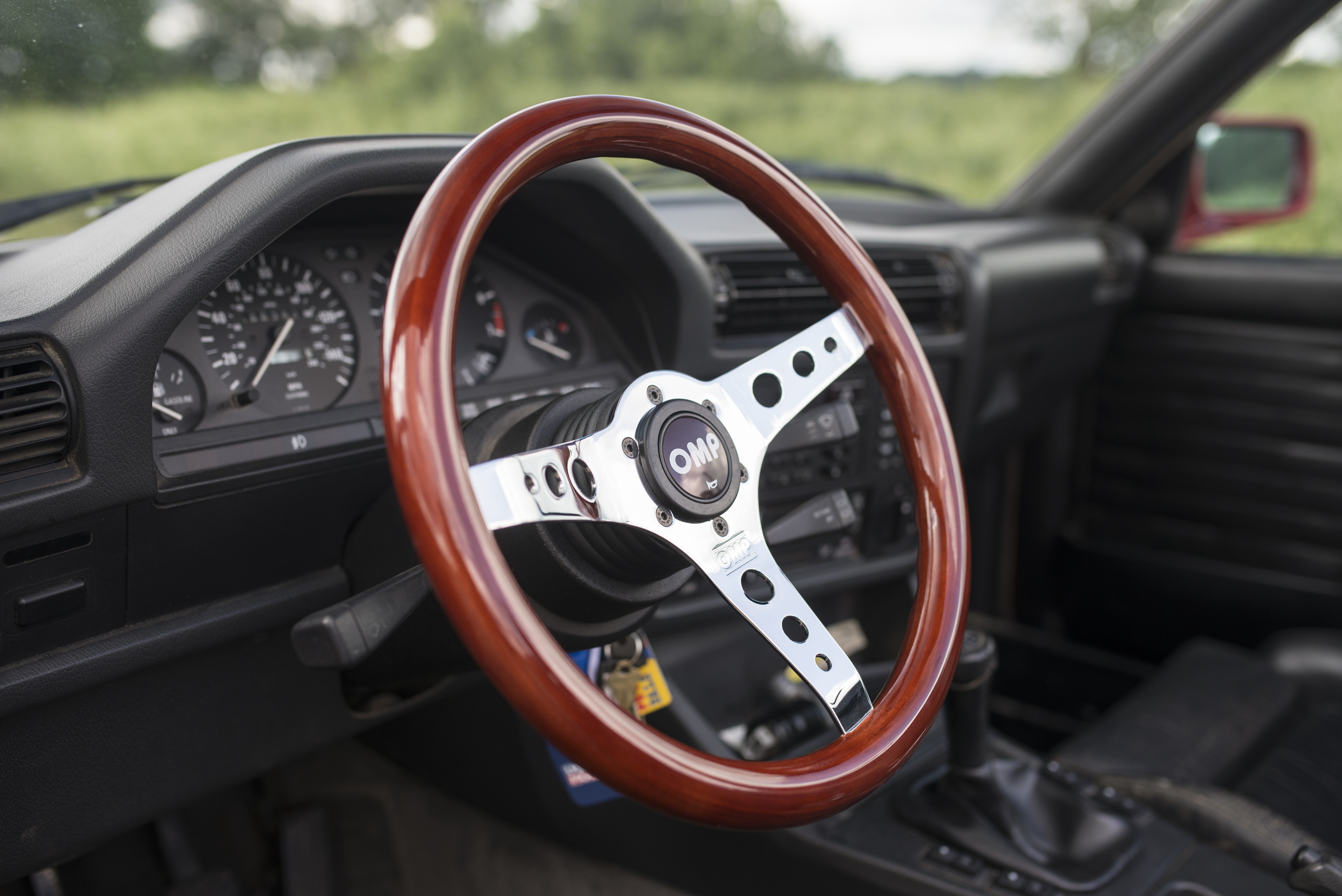
For drivers who spend most of their time on the road and do not wear gloves, a leather-wrapped wheel or vintage woodgrain wheel would be your best choice. Alcantara and suede wear incredibly quickly when driven bare-handed, so they are not the optimal choice for cars that see any road time.
The need for that better grip is what drove the development of one of our favorite wheel companies, which we highly recommend to any BMW driver looking for a motorsport wheel with the heritage to back it up. Gianpiero Moretti, an Italian racing car driver, was not satisfied with the racing wheels offered in the early 1960’s. After a trip to a local craftsman, Moretti had a custom steering wheel produced for superior grip to be used in his own personal race car. The wheel gained immediate popularity within the racing community, enough to entice John Surtees to equip his Formula One car with an identical MOMO wheel, commissioned by Moretti. It was after the MOMO wheel became a mainstay in racing that they branched out to produce OEM wheels and aftermarket wheels for the general public. In our own racing cars, we have featured a number of MOMO wheels thanks to their excellent grip, ergonomic styles, and lightweight designs.
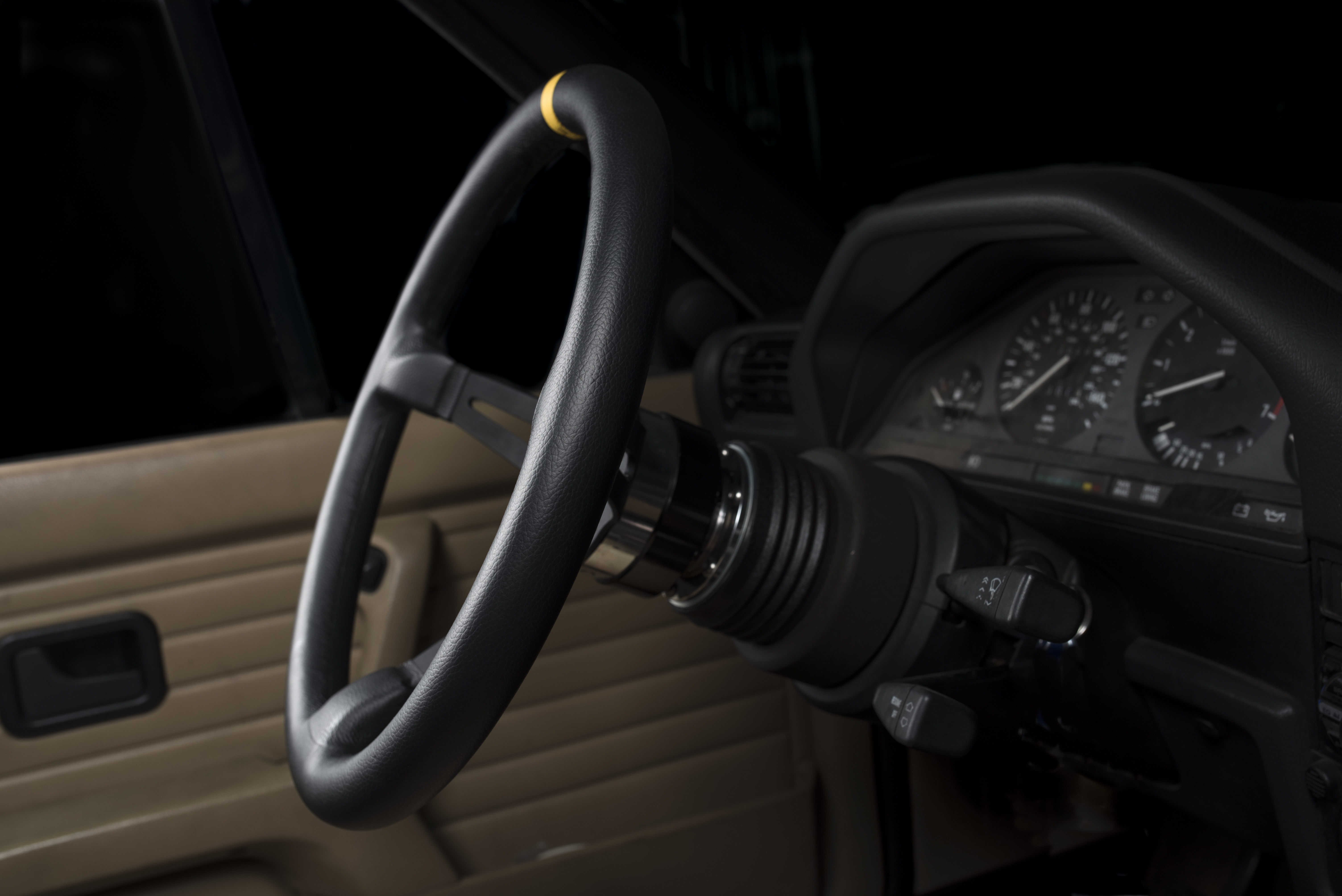
MOMO wheels are also featured in some of our project cars, like our E30, as a period-correct solution to the cramped quarters and difficult entry and exit, the E30 offers for larger drivers. The lightweight, small diameter, leather-wrapped grip is incredibly satisfying driving around on the street or for mild competitive use.
While we have used MOMO wheels in some of our racing cars, more recently we have used Alcantara-wrapped OMP wheels. OMP shares a similar history with MOMO. A trio of Italian brothers, Claudio, Piergiorgio, and Roberto Percivale, founded OMP in 1973 to produce safety equipment for rally cars. As their notoriety in the racing community grew, they began producing more equipment for drivers in the 1980’s, including steering wheels. Their designs mirrored existing classic ones as well as innovative styles to help improve the driver’s connection with the car.
The design of your racing steering wheel is predominately up to your preferences. It was the preferences of men like Gianpiero Moretti and the Percivale brothers who, through their own racing experience, developed wheels that fit their own style and liking. A steering wheel intrinsically will not make your car faster, but it offers key benefits that can make competitively driving your car easier and more comfortable for you, which can allow you to improve as a driver. With a clear idea of where you will be driving the car, a grip that feels right to you, and a style that looks perfect in your car is the right wheel for you. OMP and MOMO both offer excellent designs and a variety of materials and sizes. Engaging yourself in your car is as easy as switching to a more suitable wheel that can match your attitude, and you can find all our recommendations for our preferred wheels right here at Turner Motorsport.