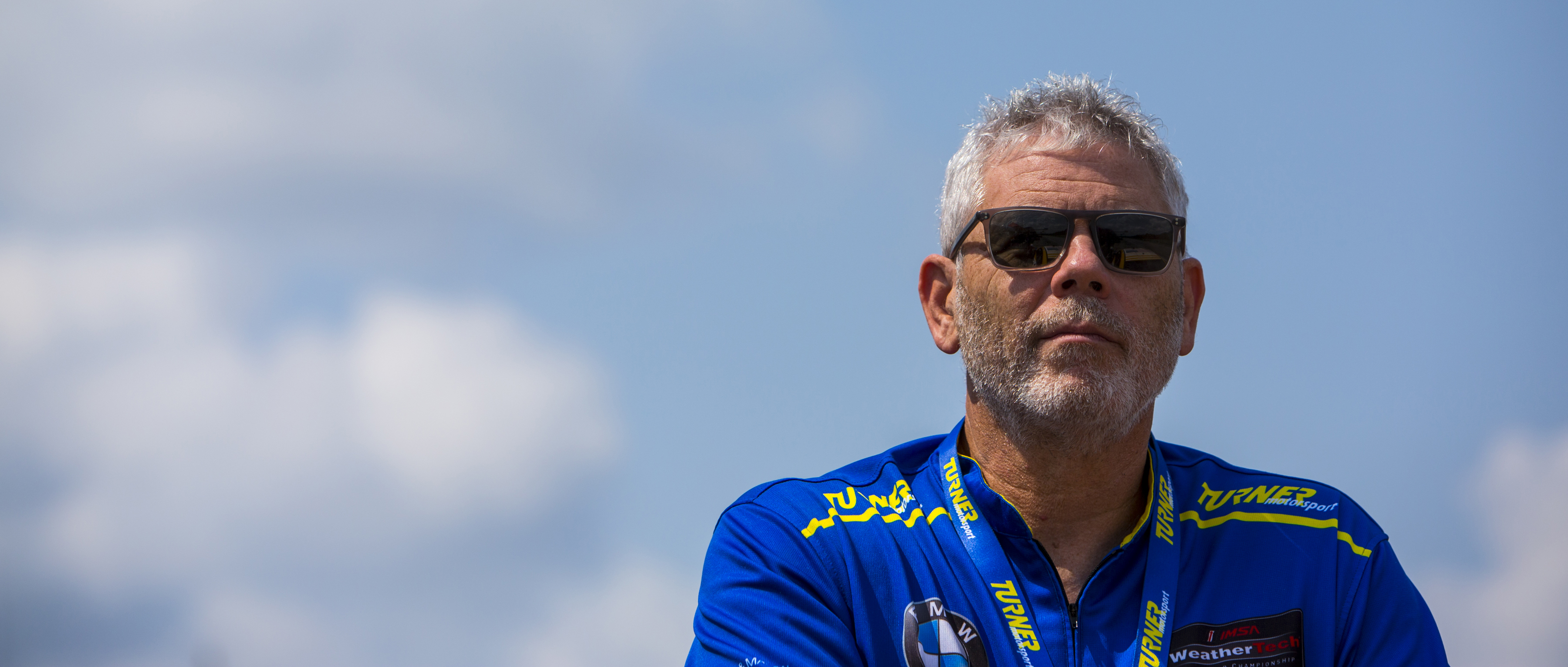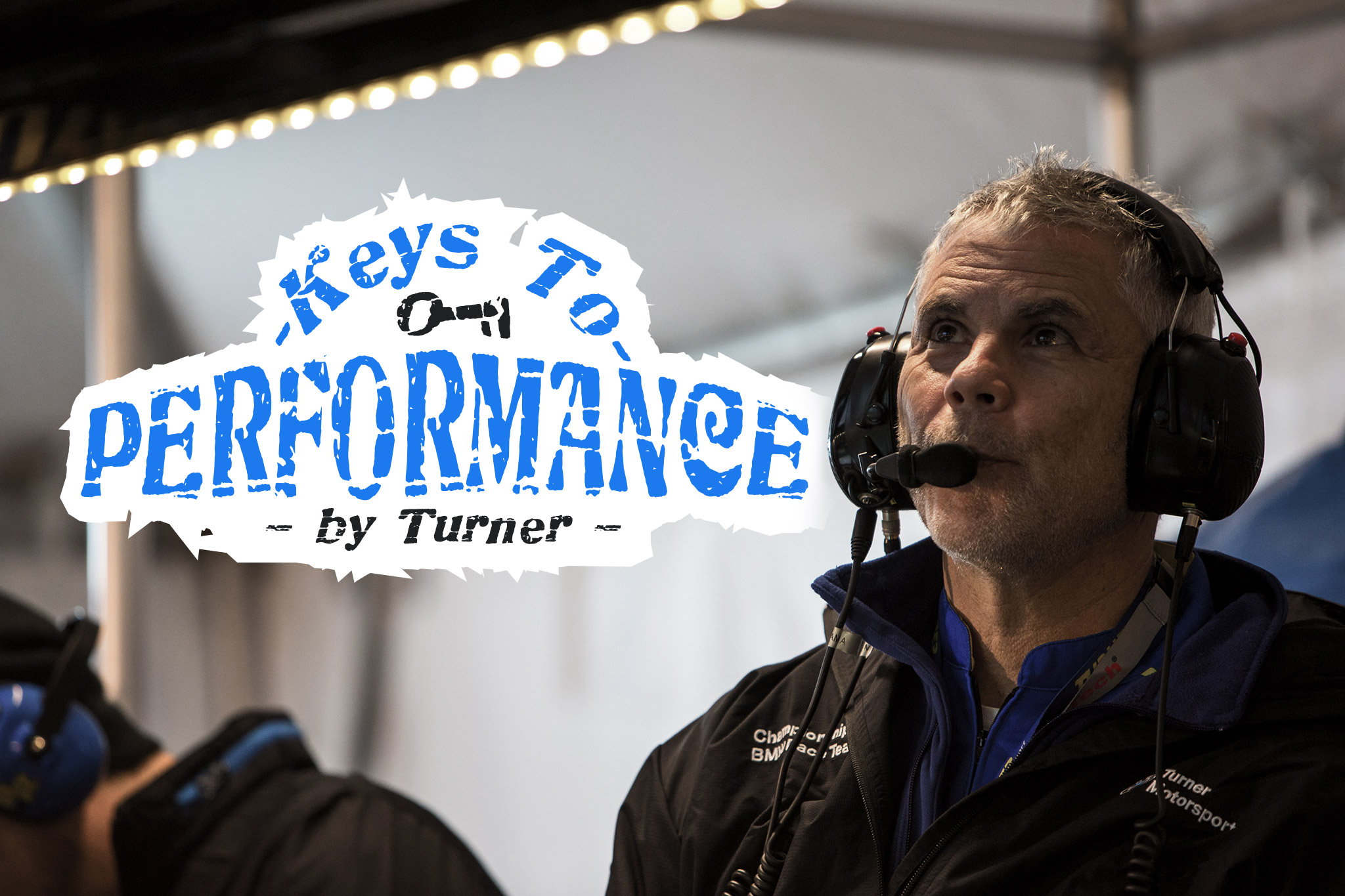
Don began his racing career as a driver. He is currently the Crew Chief and Race Strategist for the Turner Motorsport IMSA GTD team, but like everything, it was years of success and diligence that brought him to his current position as one of the most experienced racing strategists in the United States.
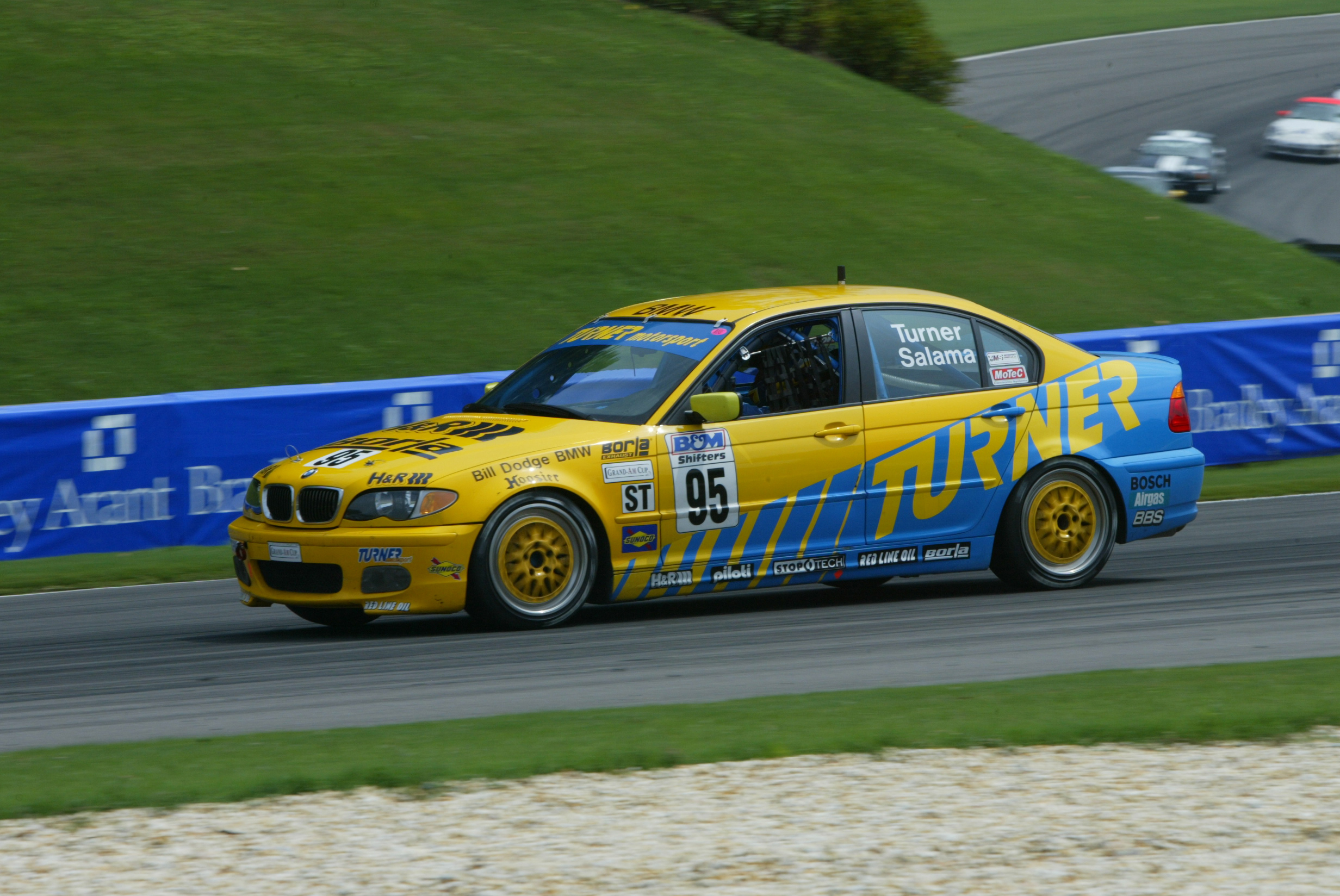
In the 1990’s, Don Salama was driving in amateur races as an enthusiast, where he became a driving instructor purely for the free track time made available to him. During that time, Don met Will Turner, who would become a close friend and fierce competitor through the remainder of that decade. In 1999, Don was invited to drive for Turner Motorsport, where he became the first amateur racer to win in that professional series on his first ever race. This would lead to more success and a brief change to race with TC Kline.
““I became fascinated with what it takes to win when you don’t have the fastest car or have an equally fast car to others. I learned from some of the experts what to do in a race to pass a car without being faster. How to use fuel strategy, pit stop strategy, communicating with drivers and encouraged them to use their tires and fuel in ways that make them last. So I was always into that and into the racing strategy like that.”
Don translated what he learned from racing on his own back to Turner Motorsport when he returned in the mid-2000s. Don and Will won the Grand-Am series, which would eventually become IMSA GTD, and has carried the team through his excellent use of unconventional decision making in order to give their car some of the best advantages on the track with some incredibly competitive cars. This is why his specialty of being faster with a slower car has been so successful with the Turner team.
Don’s background makes him the perfect candidate to provide invaluable information for drivers who need to think about more than just how their car performs, but how they perform and where they can be faster without doing anything to the car fundamentally. Thankfully, Don was gracious enough to share with us at-length some of the strategies he has used over the years and some he has refined based on his extensive experience in some of the highest levels of racing as a chief strategist and racing enthusiast. Let’s dive right into some of the amazing information Don was able to share with us about racing strategy at the professional level.
What do you do to prepare for a race so when you get to the track you are ready to go?
There are actually many jobs for this. There are car engineers and crew engineers that think a lot about track prep. For the most part, a GT3-spec car doesn’t change much; everything is homologated for this class. We do continue to change fluids and keep the car in outstanding condition, either the day after or on the road, so when we get to the track there is really very little to do. We set the car up for that track and one of the engineers works with the drivers and with data to optimize the setup for the conditions.
If you were at a track the previous year, are the settings not the same for the next year?
That is the starting point, but often we see evolutions from year to year. Tires may change a pattern or compound. The track may have consistency from year to year, but the conditions may not. Has the track been used a lot, was there a lot of rubber put down on the track before you went out, is it hot, is it cold, did it rain; all those change the balance of the car.
What about the car, does it stay relatively the same?
BMW came out with an Evolution package for the M6 that changed the aerodynamics a little bit. Once we get to the track, we have to think about how that is going to change the setup. Primarily we change the suspension, ride height, and power mapping changes, but it's not like we have infinite options.
So does your strategy change after those practice sessions? Do you change your strategy depending on where you qualify?
One hundred percent yes and there’s a lot of time I put into that at the track. When we qualify for the lower half of the field, I want to be more creative. Which is to say I want to take more risks in what types of calls I will make. I know early on the potential of the car to be at front of the field, middle of the field, or back of the field. If something is different that changes where I expect the car to be, I have to change the strategy. That (race length) already is a factor even before I get to the track in what I’m going to do with respect to where we qualify. If we qualify up front on a short track, I start with the faster of my two drivers.
On most courses, I start the slower of my two drivers. We usually have two very good drivers on the team, or four depending on how long the race is. Generally speaking, I want to start with my slower driver so the end of the race has the best possible combination of car and fastest driver. Technical tracks use the opposite strategy because it's very difficult to pass. (On those tracks), a slower driver could maintain position at the end of the race after gaining positions with a fast driver early on.
How does your strategy change at the race based on what other teams are doing?
At the IMSA GTD level, all the crew chiefs are very experienced. If we qualify at the lower half of the field and I do what everybody else does, all I will get is the same outcome as them. If I want to make up spots, I have to do something different. I plan what I think most teams will do by watching in practice and plan to do something different. My goal is to really pass cars in the pit lane.
Do other car’s capabilities give them advantages or disadvantages? How does the sanctioning body keep everything the same?
GT3 spec cars are now really about Balance of Performance or BOP. It is a terminology used by IMSA, NASCAR, FIA, and worldwide as a way of leveling cars from different manufacturers to make sure they are equal on a track.
Often, IMSA will come out with an adjustment to certain cars based on how fast or slow a car was around a track. They will either add weight, take away weight, add power, or take away power. So sometimes a car that is roughly uncompetitive becomes competitive, or a car that is too dominant will come back to the middle of the field. This means we constantly have to watch the other cars and adjust our strategy based on their performance changes.
How much does that Balance of Performance affect the way you instruct your drivers?
I have to constantly think about our BOP on the track and how competitive we will be. When six manufacturers are running nose-to-tail on a track, it is not uncommon for a driver to come back and say that he is faster than the car in front of him, but that he can’t pass him. My strategy at that point is to use a different map. A lot of fuel is used on the most powerful map, so I will change to a map that saves maybe 5% more fuel. By saving that fuel, my driver can stay right behind that driver in front of him but will use less power to do so. If I can save 5% of the fuel over a course of the fuel run, that will mean I add less fuel in a pit stop. So that will save me 5-7 seconds in the pits. If I am faster in the pits than the teams in front of us, then I will pass anyone in front of me within that 5-7 seconds in the pits.
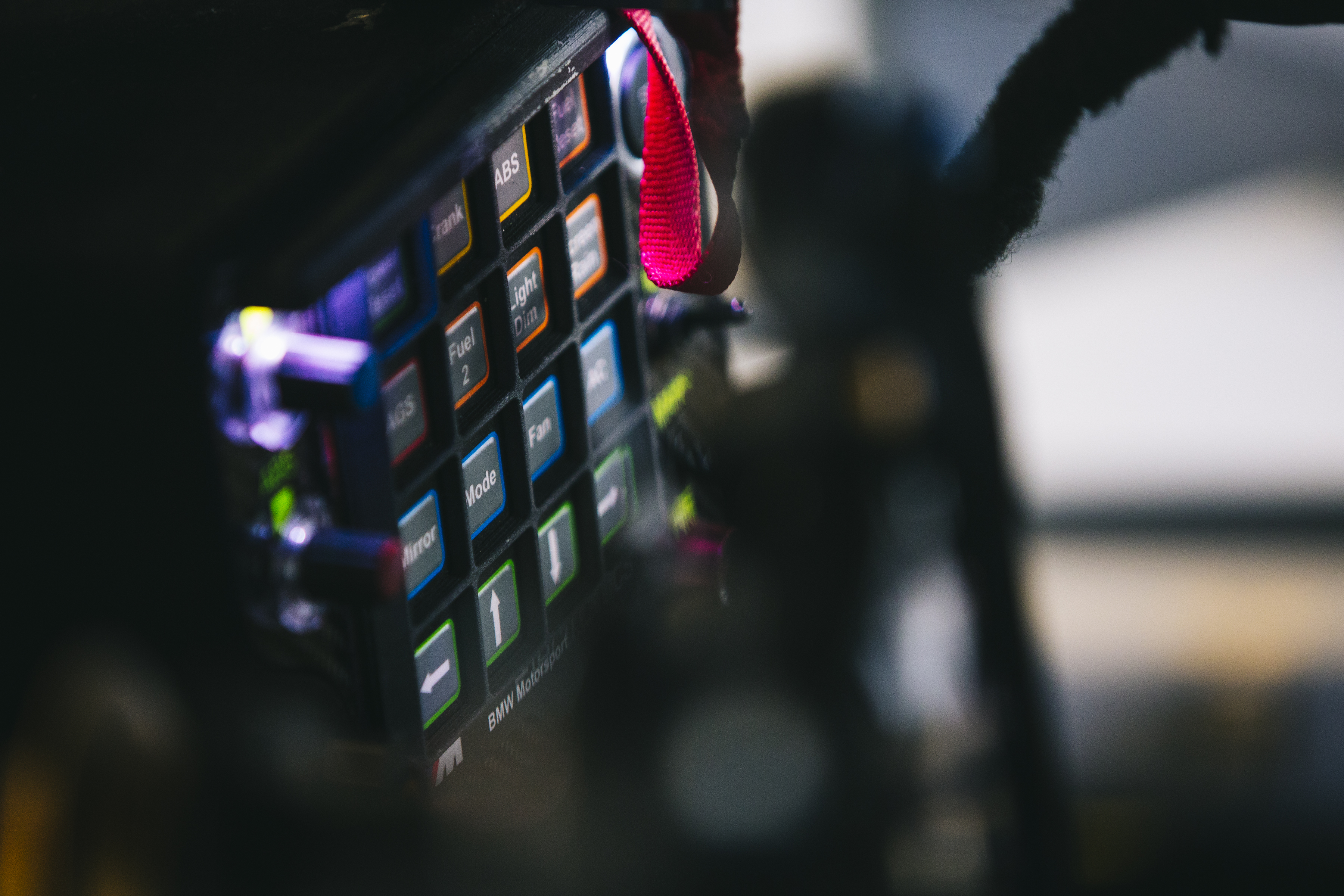
Drivers change the map there from the car?
Yes, that’s exactly right. And we can program different maps based on the tracks. When a full course yellow is called, we instantly change to our most fuel-efficient map because all the cars have to slow down.
Is fuel efficiency something that is very different between competing cars?
Some cars have more efficient engines, some have less, but the rules say it must take 40 seconds to fill your tank, no matter how much fuel you need.
How do you factor that into pit stop strategy?
The longest part of my pit stop is when I’m out of fuel. It takes about 20 seconds to change the tires. Driver changes also take about 20 seconds, but an experienced driver can take about 15 seconds. Those are my most critical time elements in a pit stop, so I will always play those three numbers to try to optimize what I want to happen.
Obviously saving fuel is the most important thing since it takes 40 seconds. So if I can put 30 or 35 seconds in, and still go just as far, that’s a huge benefit to me. Even if my driver change is a little bit longer, sometimes that doesn’t matter. But at the end of the race, when I am not putting in a full tank to finish the race, all of a sudden driver changes and tire changes become vitally important to the stop.
How long does a tank last in minutes?
Depending on the track, we average about 52 to 53 minutes up to 65 minutes.
Do tires last about that long?
By definition, tires last about that long too. You don’t want to have to change tires before you your stint is over. Sometimes I can get very good consistency on tires for about 50 minutes. Other tracks, the tires fall off very quickly, so I am down about 2-3 seconds after a 50-minute run.
How does tire wear affect your decisions?
Another strategy is to change tires more quickly if you know you can catch somebody that is about to be 2 or 3 seconds slower. In our series, every manufacturer runs the same tire and tire compound, so everyone has the same advantage or disadvantage. If no one stops for tires early, then we are all down that 2-3 seconds equally.
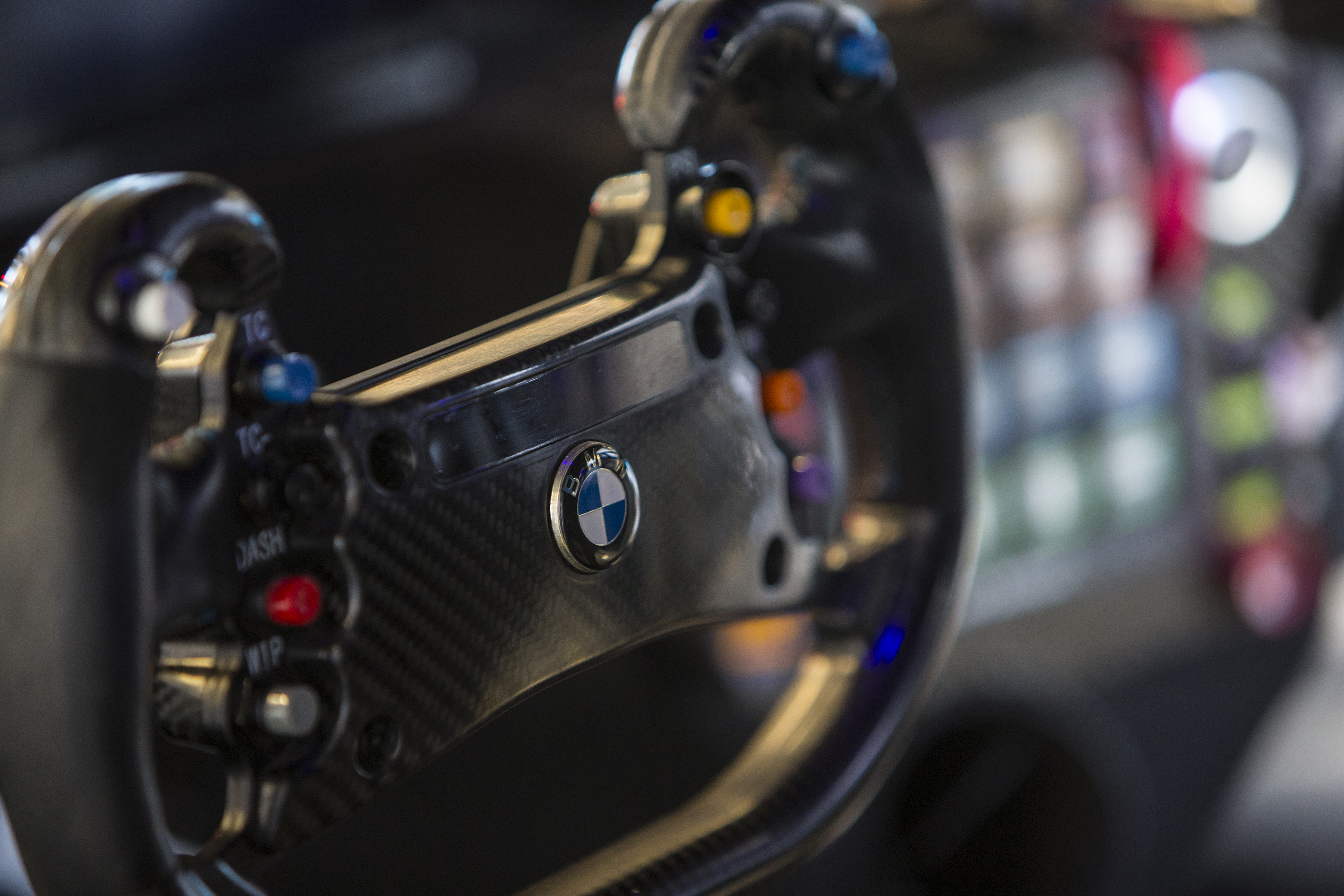
So really the only consistency in racing strategy is that nothing ever stays the same?
That is accurate. Everything is changing all the time. In my decision making, I will write out two to three plans before the start of the race, and everything changes. What the other teams do, accidents happen, how our car is running, these are things you can’t predict. But you can put out scenarios that sound like they are going to happen.
What data do you use to influence your decisions?
When I am sitting in our pit, I am looking at the data about our car and our driver and what's going on, but I am also looking at all the data about all our competitors. I see who is in the car, I see what their lap times are, I see when they pitted, I see how long their pit stops are. If I know how long their pit stops are, then I know how much fuel they took, whether they changed tires or drivers, and can see dynamically what is happening in the race. I often have to make a decision within 15-30 seconds about what to do now if something significant happens. I have to always be prepared to make a decision without spending 5 minutes of analyzing.
So does everyone get to see all this data?
All the teams buy the same software, yes. We all see the same information and look at the same data. If you go down to the Conti level, about half of the teams have that software. It's definitely a disadvantage if they don’t have it.
So the biggest part of the race is really everything around the car, not the car itself? It is how many improvements can we make outside of the race, and really only 1% of the race is about the car?
You know that is true. The engineering of the car before it gets to the race and predicting what the conditions of the track will be is huge. Some teams get it right, others don’t. Then the other big component is what you said; you can’t make any changes when the car is out there racing. The only controlling factors are how you use your drivers and optimizing how you pit stop.
After talking strategy, Don opened up to some more specific questions about his racing background and what he likes specifically about certain tracks and BMWs.
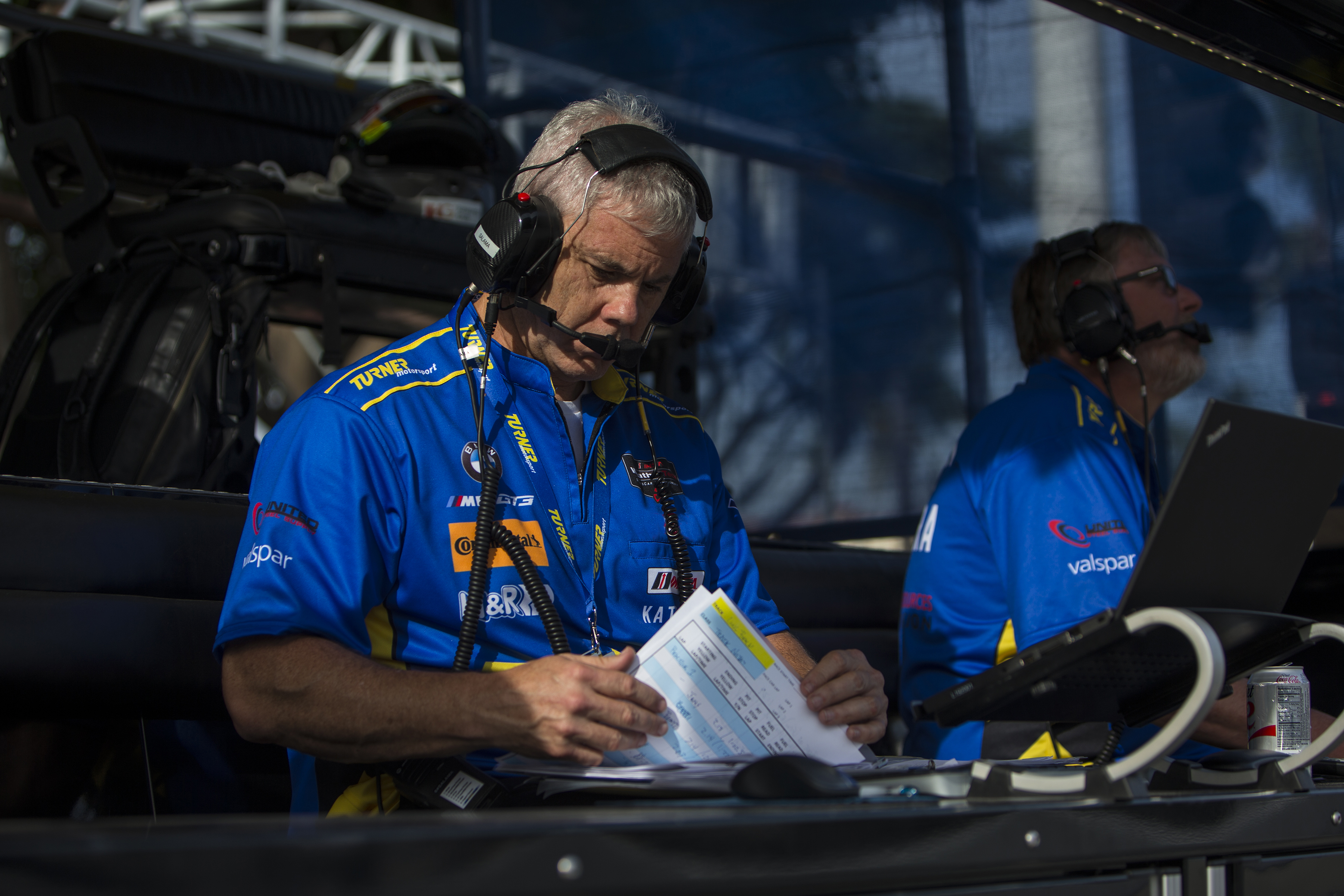
What is your favorite track, and what is the team’s favorite track?
When I say the favorite track for the team, that correlates to where is our car the best. Despite the fact that we’ve had different race cars that we have built or bought from BMW over the years, they tend to have advantages at the same tracks. These BMWs, the M6 particularly, like long, sweeping, high-speed corners. Watkins Glen is probably one of the best tracks for us. Road America, a great driver’s track, is also great for our car.
What about least favorite?
Our car has not been great at Daytona. It's really a big oval with a road course in the middle. We tend not to have the fastest straight-line car because it does a lot of things well but doesn't do one thing in a superior fashion. As you know, the M6 is a physically big car compared to the competitors. Tracks like Detroit and Daytona that have these tight technical turns or overly long straights are not good for the car.
What has been your favorite BMW to race personally?
I can’t say I have driven our M6, but I have to say my favorite was the E30 M3. I raced one that I started with stock and then it evolved as I kept racing it and modifying. There is nothing like a light, well-handling, car. BMWs got heavier over the years. You can take weight out of the cars to make them better and faster, but that car was already so accurate and so light it was just the best way for me to learn.
How did the E30 M3 help you as a driver?
I started out autocrossing the E30 M3 and it was very easy for me to learn. It had an ability to be very consistent and let me get a feel for the balance between the front and rear of a car. Also, you had to rev that car to get any power; if you weren’t in the right gear, you couldn’t get it going. You had to learn that gearing and how to use it to your advantage.
So you probably would say your favorite car for Turner was the Z4 based on what you like about the E30 and your strategic strengths?
Yes, that was just a perfect season. By far, that car was the slowest car in a straight line at every track. The BOP measure was so low, IMSA gave us a lighter car. When they gave us that lighter car, the tire wear was more consistent and less severe over a 50-minute stint. That became our secret little advantage. To run a typical race, it’s 2 hours and 45 minutes. You need a car that can run long stints successfully.
Takeaways
After speaking with Don, a real pattern became clear with regards to racing and strategy that seemed self-explanatory, but somehow also incredibly tough to understand. His incredible experience and the margins he is required to tweak in order to be faster without a faster car are almost ungraspable concepts for the amateur, but what we were able to learn from his strategy is incredibly important for anyone interested in racing. With BMWs in particular, just like with our Turner Motorsport GTD cars, having to be faster in other areas outside of the car’s capability requires us to be more technical drivers. By taking things like fuel consumption, weight, tire wear, and longevity of each stint, we can learn a great deal about how to increase our lap times without ever making changes to our cars. While it may not directly apply to amateur racing, what Don highlighted for us gives us a clear depiction of the high-level strategy it takes to lead a championship-winning team with the slowest straight line car in the series.