| Save The Pans
If you’ve been a longtime reader of Turner Motorsport Weekly, you may be familiar with my adventures in the 24v swapped E30 vert I’ve written about periodically. This week, I’d like to share a somewhat sad story about that car with a happy ending as an example of why upgrading your BMW with purpose and intention is important. More than just adding the parts you want to achieve a goal, you need to consider the necessity of parts and upgrades that allow you to take full advantage of what you have added or plan to add to your BMW. Welcome to Turner Motorsport Weekly once again, this edition is all about protecting your investment with non-OEM BMW parts. (You read that right, trust me.)
| 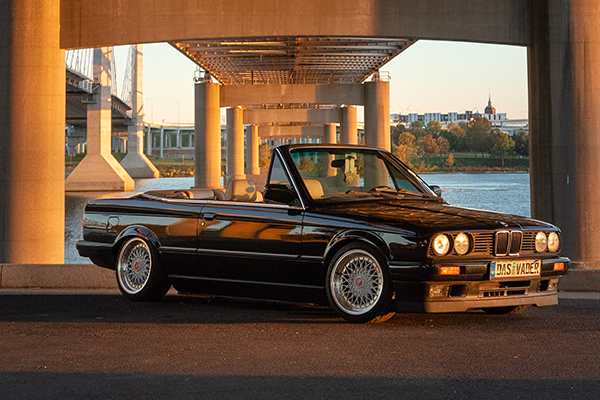 | | | When I first became interested in E30s, I was already heavily involved with car culture and handy with a wrench. Cars weren’t new to me, but the all-encompassing passion that developed as a result of my foray into vintage BMWs was. I’ve always been a ‘whole hog’ type of person, I either dive in headfirst or I’m not interested at all. With cars, I thought I’d found the end of the rabbit hole until I drove my first E30, a clapped-out gray market Euro imported 323i that I rescued from a field in Bell Buckle, TN. Even before I rolled up my sleeves to yank that engine out for a full rebuild, I could just sense the character and soul that little coupe exuded every time I jumped in the driver’s seat.
| | That step into the BMW world is what led me down the path of total consumption. I renounced all previous automotive allegiances and devoted myself to BMWs, specifically, E30s. This naturally spiraled into a lifestyle that probably should have landed me on “Hoarders,” but one particular BMW in my fleet of shitboxes took most of my attention. The 1988 E30 325ic I picked up to be my daily driver received the majority of my passion.
It was incredibly clean when I bought it. A two-owner car that had lived most of its life indoors as a summertime weekend cruiser, this E30 was as minty as they came in terms of physical condition. Mechanically, it needed all the usual maintenance and then some, but the interior, exterior, top, dashboard, and all the other important bits were flawless. I was in love.
| 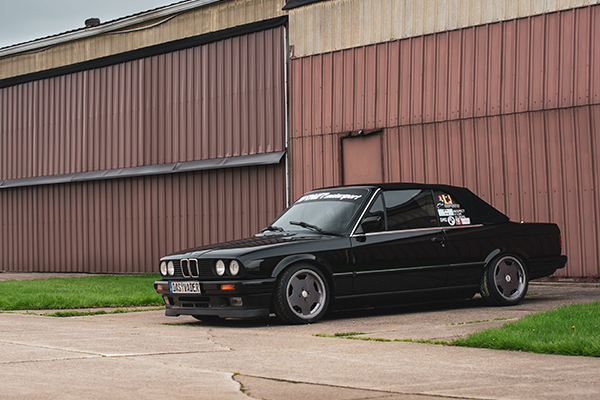 | | The morning after I brought it home, I was already knee-deep into making it perfect. I’d preemptively accumulated a full set of brakes, new KONI dampers, H&R race springs, E90 ‘drop hats,’ control arms, sway bars, cooling system, timing belt service kit, and all the various gaskets, hoses, lines, fluids, and filters I’d need to completely overhaul the car. By the end of my first weekend with it, that E30 was as perfect as it was when the original owner was driving it around new.
| | Unfortunately, since I was used to much more power than the little M20 could spit out, I quickly decided to yank that single-cam block and replace it with an M52 I had laying around from another project. Out came the M20, in went the M52 along with most of the maintenance items I’d just completed on the M20. Car guys, right?
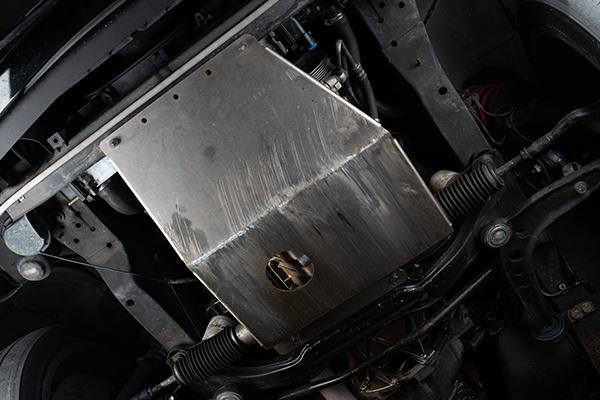
| | With that installation came the realization that my extremely lowered ride height and the now lower than ever M52 oil pan were likely going to bite me in the ass. However, being the impatient little scamp I was at the time, I decided to forego ordering the skid plate I knew I needed to daily drive the E30 at that height with that engine, and pulled it out of my shop to take it on a test rip.
| 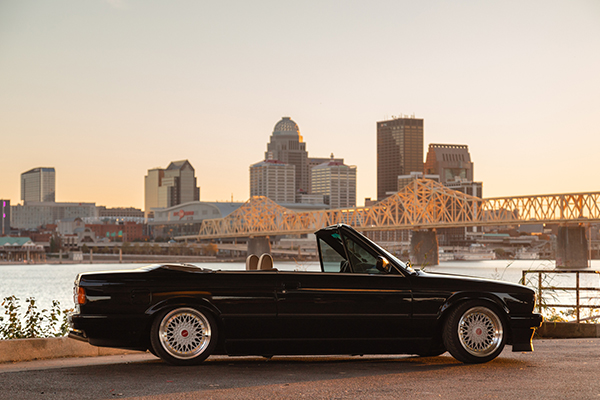 | | Nothing happened that day, nor were there any scares for several months after I’d swapped the engine. Despite constant reminders from other 24v swapped E30 friends and a few white-knuckle moments where I’d screeched to a halt just in time to prevent hitting any elevation changes in the road that might smack my oil pan, I still hadn’t spent the couple hundred bucks on a skid plate. I didn’t see the need. I was used to lowering cars, I hadn’t broken anything yet, why would I ever actually need a skid plate?
| | The answer came almost a year after the swap was completed. I was returning home from a trip to Chattanooga and stopped by my garage to drop off my travel tools in my toolbox. On the way from my shop to my house, a short few blocks’ drive, I hit a patch of construction that hadn’t been there before I left for the trip. What looked like a flat section of pavement was actually a paved-over hole that had been dug up that weekend and improperly filled. There was nearly a four-inch drop spanning the width of the road and a matching four-inch shelf on the far side of the inverse speed bump.
| | I didn’t even need to look after I hit it at speed. I nearly put my head through the convertible top when it bounced me clear out of my seat. It felt like I’d bent the car in half I hit it so hard. I could hear the idle change and knew instantly there was a crack in my oil pan, maybe something worse. The oil light had yet to come on, so I just turned around and limped the few blocks back to my shop. I turned off the engine and sat outside in the parking lot just waiting for the inevitable. Sure enough, by the time I’d opened the garage door, all eight liters of fresh LIQUI MOLY had become a sickly brown puddle under my E30.
| 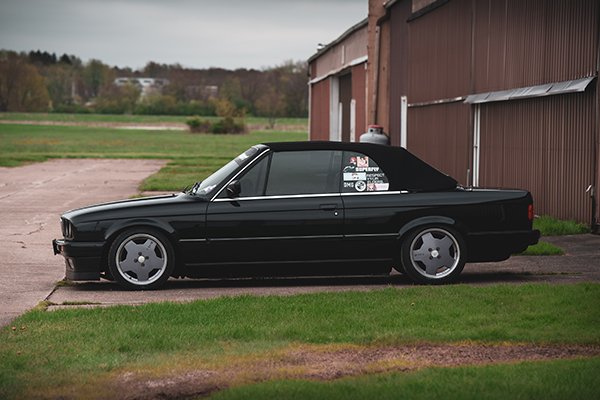 | | No sooner had I pushed it into the garage had I ordered the skid plate I should have when I first swapped the car. I was fortunate that a friend had a spare M5x E34 oil pan literally sitting on a shelf in my shop that he kindly donated to me, but it could have been much worse. Even then, those pans were becoming harder to find and more expensive by the day. What should have been a relaxing end to a vacation weekend in my hometown ended with an extra vacation day spent under the E30 fixing my stupid mistake.
| | Since then, that E30 never experienced anything remotely close to what happened that day. I didn’t drive it, even repaired, until the skid plate was delivered and installed. But when I did finally take it back out after I’d finished the repairs, I did so with confidence and peace of mind. That skid plate allowed me to drive at an extremely lowered static ride height for years while it protected my engine bits that hung lower than the subframe. It allowed me to drive it long distances without worry, even taking me from Nashville up to the northeast for my interview here five years ago. It’s been across the country with me several times, often receiving my thanks and praise when I hit some unexpected bridge connection or pothole in the road that would otherwise have dealt damage to my precious E30.
| | In the end, I didn’t have more than a few parts to replace. I didn’t cause any lasting damage nor did I hurt more than my ego. What I did do was learn from my mistake. Driving a lowered car, even just an inch or two is always a gamble. You’re betting against your car that you can maintain perfect attention at all times to anything in your path, you can see a potential hazard, and you can avoid it. However, just like doing crime, you have to be perfect every time. The road only has to catch you slipping up once for it to be an expensive mistake. Why take that risk when you can just protect your car and never worry about it again?
| 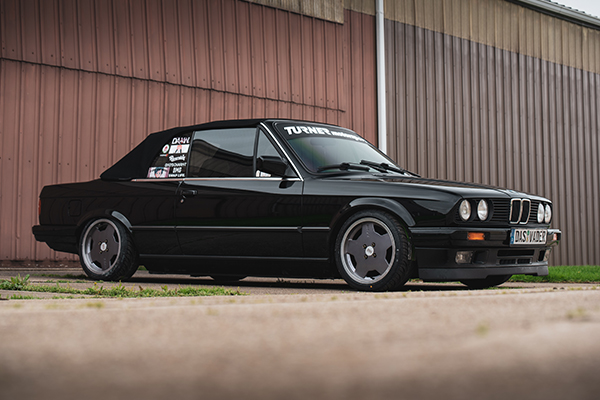 | | That’s precisely why we developed skid plates for most BMWs. We know the importance of keeping your investment safe, especially when the road conditions are less than ideal and you’re rolling static. With a Turner Motorsport Skid Plate, you aren’t spending what it costs, you’re saving potential expensive repairs and investing in your peace of mind. Don’t let concern for your BMW ruin the joy of driving it when all it takes is a simple upgrade to protect it from whatever the road can throw your way. When it comes to your BMW, it’s a bit like protecting yourself. It’s better to have a skid plate and not need it than it is to need one and not have it.
| | | | |