How To Track Day With Driving Instructor Bill Griffin
We had some fun playing with hypotheticals last week as we imagined what a real ‘retro revival’ BMW would be and certainly enjoyed all the responses from you, our dear readers. This week, we’re going to ground ourselves in reality. While the nation has been back and forth with battling COVID-19 and trying to make up its mind as to how to tackle it, many of us have just focused on what we do best. Bill Griffin, our friendly neighborhood racing instructor, SpecE46 driver, and good friend, has been spending time on the track teaching and driving. This weekend, Bill is at Mid-Ohio driving once again in his E46. Since we had the pleasure of sitting down with him for lunch, we were able to speak to him at length about what it takes to do what he does. For our ‘Ultimate BMW E46 330i build,’ this article is focused more on you, the driver, than it is the car. Welcome back to Turner Motorsport Weekly. Here’s what you need to know about starting your track day events from a racing instructor’s advice. | 
|
|
| For the Spec E46 class, which we have covered extensively in other articles about Bill Griffin and the class he drives, you obviously need an E46 330i and it has to be built exactly to the specs outlined by the racing body. However, you aren’t going to just buy one, build it, and jump into that class. You have to work your way up before you can compete wheel to wheel with Bill. According to him, there is only one way to get there: seat time. | | That means, whatever is in your driveway, you should take to the track. This is advice we’ve also heard from Don Salama, our Turner Motorsport team manager and race strategist, that we can’t stress enough. It doesn’t matter if it’s a completely stock E36 318i or your Camry daily driver. Racing comes down to seat time. So sign up for an event and bring what you have to start learning racing etiquette and fundamentals. | 
| | However, it doesn’t mean take your car without doing a few things first. Bill tells us that you don’t need coilovers, a cage, racing tires, racing brakes, or any of those big-ticket performance parts, but you still need to do some work. It honestly takes what we’ve covered in our ‘long-term storage checklist’ article. | | The first step is to sign up for an HPDE 1 event. Then clean your car inside and out. You don’t want any Baco Tell napkins, chapstick, old AA batteries, air fresheners, or loose change rolling around your cabin. Remove your floor mats, thoroughly clean your interior, trunk area, and exterior for a fresh slate to begin your track day prep. | | With a clean car, you’re ready to start addressing anything mechanical. Bill suggests that you do any cooling system maintenance, especially in higher mileage cars, so you don’t experience anything catastrophic on the track with harsher conditions than your cooling system endures on the street. That means a fluid flush, new OEM BMW coolant, perhaps a new thermostat, water pump, or even hoses/expansion tank if yours are old, brittle, and beginning to show their age.
A new air filter and an oil service with a fresh filter are also in order. It’s probably not a bad idea to do a LIQUI MOLY engine flush, too, so your engine can be as clean as your car. | | | | | Then, flush and replace your brake fluid for the best brake performance. You don’t want a soft pedal or boiling fluid on the track. It’s also a good idea to install fresh brake pads. Bill suggests that you don’t need track pads for an HPDE 1 event, your choice of street pads are fine. Though, if you are insistent on switching to a higher performance pad, don’t settle for a street performance pad. Go straight for something designed specifically for track use like HAWK DT60 or another dedicated pad. | | |
|
| Along the same lines as your choice of brake pads, Bill says you shouldn’t worry about buying dedicated track tires for your first events. Even your daily-driven all-season tires are fine. It’s better to burn up inexpensive tires than spend money on track tires you won’t be able to take full advantage of until you have much more experience. | 
| | With the basic maintenance addressed, Bill also tells us that a ‘self-tech’ checklist is also best practice. This checklist we’ve linked here will walk you through inspecting everything else that might need to be replaced or modified, like your battery tie down, belts, tires, and more, so you know you can be ready to show up and start driving rather than fail a tech inspection and have to spend time under the car rather than inside it. | 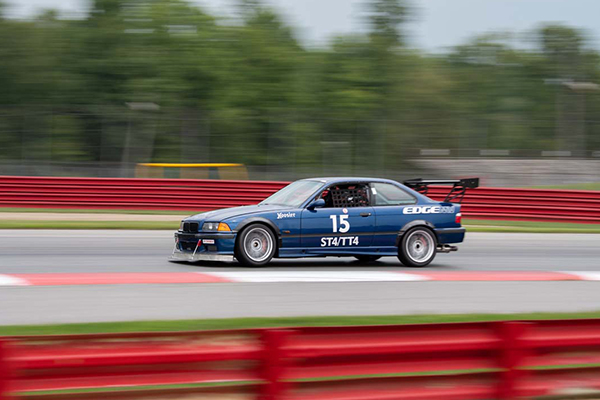
| | After all that work you likely need to do to your car, it’s time to get yourself ready for the track, too. The most important thing is to not wait to do all this until right before you need to leave. Bill stressed the absolute necessity of a good night’s sleep before your event. If you have to drive several hours to your first track day, it’s a better idea to get there the day before your event and spend the money on a hotel or even camp at the track so you can have a full night’s rest. You need to be mentally present and awake to drive, so don’t just hop in your car the day of the event at 4 am and expect to have the energy to devote your full attention to racing later that afternoon. | 
| | If you’ve done it right and given yourself time to prepare, then you should also take a look at a track map. Memorize the corner numbers, identify all the towers, and even watch videos from inside a car on that track if you can find them. The more familiarity you can have, the easier it will be to learn the track so you can focus on driving, not figuring out where to drive. | 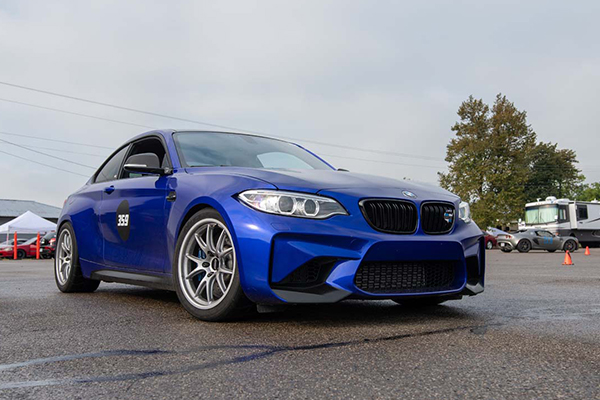
| | For those of us with sim rigs or even just a video game that features the tracks you might have access to, Bill says spending time driving that track in a game can offer some relatable ‘hands-on’ experience. While you won’t feel the car, you can at least learn the corners, know where the braking zones will be, and become accustomed to watching towers for flags. | | With that, you’re ready for your first event! But what next? | 
| | Once you’ve signed up, prepped yourself and your car, and started doing your homework, you can take advantage of a program like NASA’s HPDE courses. HPDE is High-Performance Driver Education and offers you the opportunity to advance in stages with help from expert instructors like Bill Griffin. | 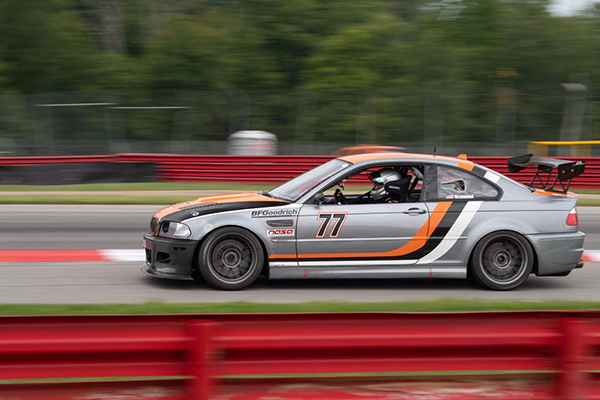
| | HPDE 1 is the first level and where you can learn the basics of racecraft. It uses both classroom education and on-track experience to help teach you what you need to know to advance. An HPDE 1 driver will learn the basics like different types of braking, understanding racing lines, weight transfer, how to shift smoothly, and will spend time following an instructor around the track in their car to both observe and experience first-hand how a seasoned driver approaches every part of the track. | 
| | Once you’ve completed enough HPDE 1 events and are comfortable enough with your car, the track, and yourself, you can ask your instructor to move you up. You’ll take a written test and then go for a ‘check-off’ run in your car that your instructor will observe and either sign off to advance you or tell you that you have more to work on before you’re ready to advance to the next class. | 
| | If your instructor signs off and gives you the green light, you’ll move up to HPDE 2. There, you will have more freedom and want to begin observing more about your driving strengths and weaknesses through the eyes of someone with more experience. Bill says that this stage is where he tells drivers to always work on at least two areas of weakness every time they’re on the track. Don’t go out and ‘take laps’ for fun. Drive with a purpose. Take notes on the track, your reference points, and identify where you need to focus on improving every time you’re in the car on the track. | | With a few HPDE 2 events under your belt, if you feel ready, once again you can ask your instructor to move you to the next class. Rinse and repeat. | 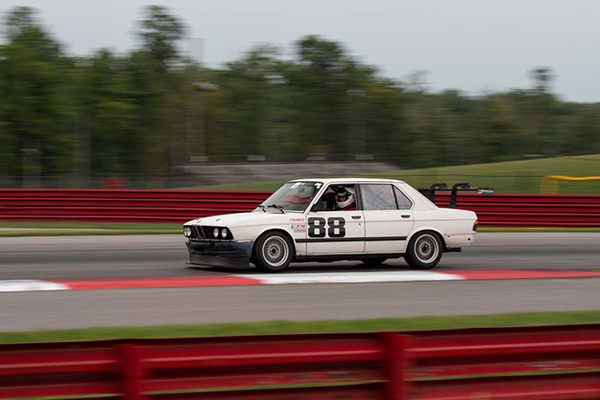
| | In HPDE 3, you will be open passing except in braking zones, will be comfortable on the track with other drivers who have advanced with you, and will begin developing real technique beyond just familiarizing yourself with the basics. At HPDE 3, drivers are competent and working on improving themselves to the point that they are no longer novices. | 
| | After HPDE 3, if you’re ready to move up and your instructor has signed off, you’ll be ready for the final class. HPDE 4 is for fully-competent drivers who exhibit self-awareness, are comfortable on the track, have open passing at any point, and are truly racing to learn rather than learning to race. HPDE 4 is where you will be readying yourself for competition, if that’s your goal, and focused on becoming faster with every lap, consistent, and noticing what your car needs to be competitive. | 
| | One of the biggest questions is: how long does all this take? Truthfully, Bill says, it depends. If you have some translatable experience, like karting, dirt bike racing, or even skiing, you may pick things up faster and not need to do as many events at each class before you are ready to advance. It can happen at your pace, as quickly or slowly as you are comfortable, to advance through the classes. Bill explained that he likes to see an average of four events per class, but that’s up to the comfort level and experience of the driver. It also comes down to their goals. | 
| | If your goal is to be competitive, you’re going to want to spend as much time as possible on the track and get to a point where you are solidly experienced. That might mean spending time in each HPDE class or running quickly through them to get to HPDE 4 and then staying there until you’re ready to go wheel-to-wheel, but it should happen at your pace. If you just want to learn car control, become a better driver, and have fun seeing what your car can do, then you may not be interested in advancing to higher classes. Either way, a performance driving program like NASA’s HPDE series, is exactly what it takes to learn your car and improve your driving. | 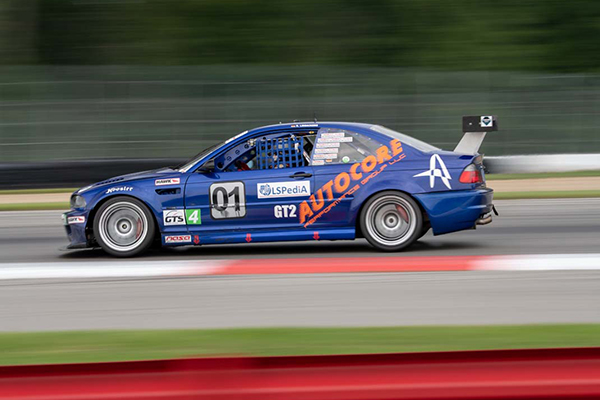
| | Naturally, there is only so much that writing can prepare you for your first track day. The biggest hurdle is simply making yourself do it. Bill says to stop postponing, telling yourself you need to do one thing or another to your car, and just take the plunge. There is no substitute for experience. Once you’ve been out there on the track for your first event, you’ll be infinitely more prepared for your next event than any guide or article can do for you. So, as we’ve said before, just get out there and drive! We’ll see you at the track. | 
|
|
| | |


