Adjustable End Links: FAQ and Everything You Need To Know
Fine-tuning your BMW’s suspension for either that perfect look or performance on the track is as much an art as it is a science. It takes a lot of measuring as well as personal taste to arrive at the setup that behaves and feels the way you need it to. While there are set formulas to achieve certain characteristics, depending on how you want your BMW to look and what feels best for you on the track, you’ll find that ‘perfect’ for one driver isn’t necessarily 'perfect' for you. However you arrive at your desired handling characteristics and ride height, there are still some universally true aspects: everything hinges on ensuring what you have and what you want will work together to provide an improvement rather than a downgrade. This week, we’re talking about end links, sway bars, and some often forgotten bits of suspension tuning when it comes to your first steps into upgrading your BMW’s handling.
To begin, let’s define those terms we used. | | | | Sway Bar
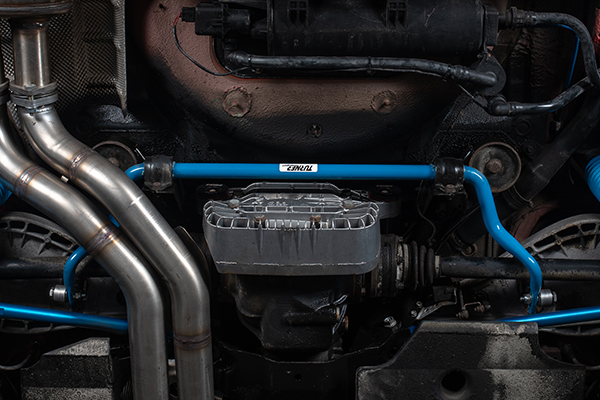
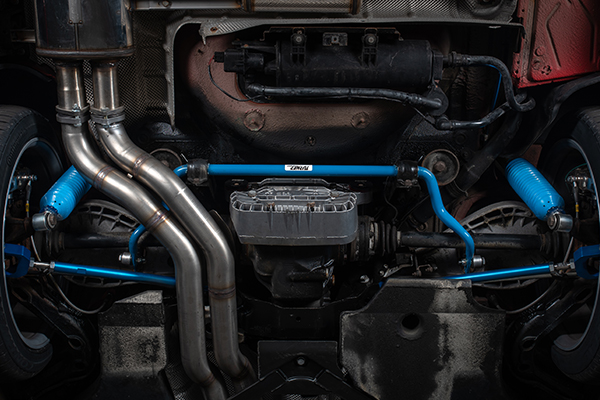
A sway bar also called an anti-sway bar or an anti-roll bar is effectively a torsion spring that connects the two independent suspension assemblies on a shared axle. It helps resist body roll through corners by acting like a spring that helps pull the high side of the car back to the ground and push the low side up, which makes your car corner flatter. Modern vehicles in one form or another all use a sway bar on each pair of wheels with very few exceptions. They improve your cornering and make regular driving more comfortable.
Upgrading your sway bars to adjustable units that are stiffer and lighter allows you to fine-tune the body roll characteristics of your BMW in the corners as well as give you the ability to tune out oversteer or understeer depending on your preferences. A stiffer sway bar in the rear will help reduce understeer while a stiffer front bar will help reduce oversteer. A balanced setup allows you to achieve the perfect cornering feel and optimal traction for your desired driving characteristics. Upgrading your sway bars is highly recommended even on stock vehicles to improve grip, reduce under/oversteer, and provide an overall better feel through the corners. | | | | End Links
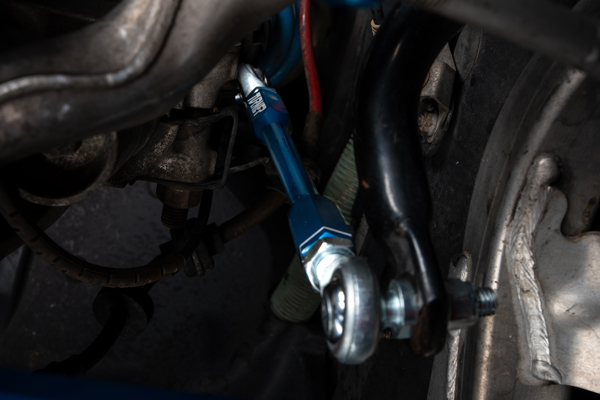
End links are simply the links that connect each end of your sway bars to the suspension. On BMWs, that can be either the strut assembly or the control arms, depending on your vehicle. These links come in fixed lengths from the factory and use a rubber bushing. Naturally, when you upgrade your sway bars, those rubber bushings become a weak point and reduce the effectiveness of your sway bars. Additionally, over time, end link joints wear out and further reduce the sway bars’ ability to do their job.
Upgrading your end links is a good idea for several reasons: first, our Turner Motorsport end links use spherical bearings rather than soft rubber bushings or ball joints, which reduce deflection and improve responsiveness. Stiff ends make everything tighter and allow your sway bar to be more effective. Perhaps most importantly, though, our end links are adjustable, which means you can prevent preload and interference with any other suspension components. The only question is, when is it necessary to upgrade to adjustable sway bar end links? | | | | Why Adjustable End Links Matter
Any time you lower or raise your vehicle’s ride height with suspension changes, like coilovers or lift kits, you can induce preload on the sway bar. The change may also cause your sway bar or end links to interfere with suspension components due to the lowered/raised ride height, which will cause noises at best, reduced performance at worst.
With adjustable end links, you can set the length of your end links to allow for zero preload, or pre-tension, on the sway bar, which means its full range of resistance can be used to effectively prevent body roll. Not only that, but they allow you to orient the sway bar in such a way that anything it may have contacted with the stock length end links can be cleared when the suspension articulates. | | | | Wrapping Up
So, what you need to know is that lowering your vehicle can and does affect both the preload and location of your sway bar when stock end links are used. Not only that, but your sway bar isn’t as effective as it can be with the factory end links due to the deflection they allow. With upgraded adjustable end links, like the custom and pre-set options we offer at Turner Motorsport, your sway bar can perform its job to the best possible degree without risking any interference or preload as a result of a lowered ride height. | | Q&A
Q: When do I need upgraded adjustable sway bar end links?
A: When you have lowered your ride height significantly and/or when you want to maximize the effect of your stock or upgraded sway bars.
Q: What is preload?
A: Preload is tension applied to the sway bar when it is at rest. Sitting on level ground, your sway bars should have no tension at all. Any tension applied as the result of improper length sway bar end links limits the range of resistance your sway bar has and will reduce their overall effect. This can be extremely negative for your handling, as you may find your car will under/oversteer more despite ‘improving’ your suspension with coilovers.
Q: How do I measure for the proper length end links?
A: You may be able to measure your stock end links in the car, but likely you will have to remove them. Simply measure their length and either add or subtract however much you have lowered your car or the distance between the sway bar and where your stock end link sits depending on where you would like your sway bar to sit.
Q: Will there be any additional NVH (Noise, Vibration, Harshness)?
A: No, even with spherical bearings, you will not notice an increase in noise. You may hear some clunking if your sway bar is pre-loaded or if it contacts other suspension components in their range of motion, though. See the previous question dealing with proper measurements. | | | | |