What’s The Deal With Diesel BMWs?
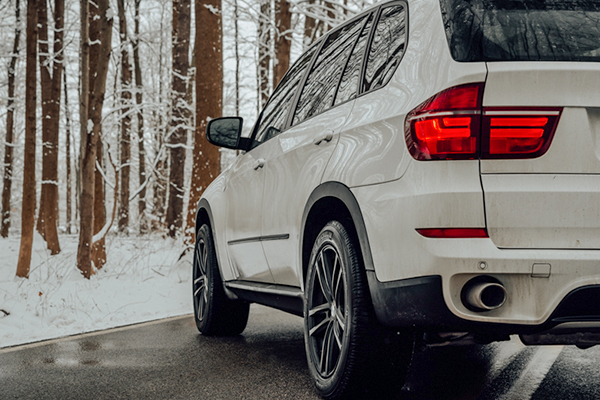
As some of you may be aware, I’m originally from Tennessee. I spent my entire life up to my mid-twenties there in the volunteer state but somehow avoided the often stereotypical ‘country’ lifestyle. I was never into hunting, fishing, mudding, or big diesel trucks. My interest was exclusively in performance cars, which manifested into a love of BMWs. With no real draw towards trucks, the main diesel-optioned vehicles we have here in the states, my automotive interest never involved anything diesel. Maybe that’s due to the stigma of diesel engines here in the states, maybe it's because none of my friends ever had anything diesel. Whatever the case, I don’t think I’m alone in this mindset that diesels are only appealing to hay-hauling, coal-rolling, good ol’ boys here in America. However, after taking a coworker’s diesel-powered X5 out for a drive, I can report that I was completely and utterly wrong about diesels and think that we BMW enthusiasts might be missing out on something our European brothers figured out a long time ago: diesels are super interesting. | | | Lately, here at Turner Motorsport, we’ve had a number of diesel-powered BMWs in for product development. It seems our R&D team has also caught the diesel bug, as we’re launching a few new goodies for the clattery versions of some popular BMWs. Most recently, we introduced the E90 335d Turner Motorsport Cold Air Intake and are excited to see what our audience has to say about it. With multiple diesel variants here, it seems these are finally becoming more popular, even among enthusiasts who would never consider a diesel in any other form. The question is, why would anyone actually want a diesel? | | | Diesel engines are incredibly simple, robust, and reliable. Whether naturally aspirated or turbocharged, they inherently produce significantly more torque than a comparably sized gasoline engine. This additional torque, which is definitely noticeable in the X5 I borrowed, is the result of two key differences between diesel and gasoline engines. First, diesel engines have longer stroke lengths than gasoline engines because they need to create more cylinder pressure for fuel combustion. Second, diesel has more potential energy per gallon than gasoline, which makes it more efficient and therefore capable of producing more torque. They may have a lower redline than an equivalent gasoline engine, but diesels make their power way down low and don’t need to rev up high to reach peak efficiency. | | | | | On paper, this seems like it would be a noticeable change in how a vehicle feels to drive. In reality, at least with the X5, it didn’t change much. This is probably due in part to the automatic transmission, but for me, driving the diesel version didn’t take much time to grow used to. It felt as natural to drive as any other BMW, just with a lot more punch when you hit the throttle. This diesel engine is also turbocharged, which added another element of fun. Just when you feel like the torque is about to drop, the turbocharger has built enough boost to carry the engine through to the red line without ever letting the power subside. It just feels stout from off throttle to floored and everywhere in between. | | | So why have I never been into diesels? They have massive potential, they’re incredibly fuel-efficient, modern diesels don’t feel too much different than a gas car, and in a BMW, they definitely feel smooth. Having now driven one, I want more. I want to see what a software tune, intake, exhaust, and maybe bigger turbo could do with this platform. Fortunately, this being Turner Motorsport, I may well have a chance to experience that sooner rather than later. With all these diesel BMWs around now, we’re hard at work coming up with ways to make them even more enjoyable, hopefully without sacrificing too much fuel economy in the process. | | | | | Fuel economy actually brings me to my final point: diesels are extremely efficient. Despite the stigma of being ‘dirty,’ they’re rather appealing to the environmentalist in me. While I do understand that emissions defeating software, straight pipes, big injectors, and all the things that people from my neck of the woods do to their diesel trucks make them extremely harmful, the flip side of that coin is a platform that can produce more power per gallon. Driven correctly, and with emissions devices left intact, the average diesel engine is less environmentally detrimental than a gasoline-equivalent. For you and me, that equates to fewer trips to the pump. For the atmosphere, that means fewer tons of greenhouse gas emissions when the lifecycle of the vehicle and diesel fuel are considered from the cradle to the grave. So it’s good for your wallet, good for the environment (relatively speaking,) and still incredibly fun. | | | Which begs the question: why do we, as Americans, consider diesel engines so uncouth? Why did they never take off here like they did overseas, where you can have just about any vehicle in diesel form? I’m going to speculate here, but I think it is more than just one or two reasons that drive us yankees to the conclusion that diesels are inherently bad. Because diesel engines are primarily used in commercial vehicles, work trucks, and for jobs we consider ‘working class,’ it would be safe to assume that Americans prefer gasoline engines as a status symbol. That is likely antiquated now, but when the automobile was gaining popularity in its early post-war days, this was probably the case. | | | | | Additionally, the stigma that diesels are loud, dirty, and slow probably played a hand in the adoption rate of American consumers. Perception is everything. When the average American consumer was more ‘into’ cars than they are today, the cost of gasoline was incredibly cheap, horsepower wars between muscle cars gripped consumers, and performance was associated with gasoline engines, not diesel. Not only that, but until modern emissions regulations were instated, diesel engines were incredibly dirty. They produced exponentially more soot and harmful emissions, which is the smell we all know too well from diesel engines of the past. Finally, that ‘diesel clatter’ was much more noticeable and less dampened than it is today thanks to modern engineering and soundproofing in vehicle design. Effectively, the perception of diesel engines has persisted in American consumer’s minds despite being completely outdated. | | | The same can be said for electric vehicles, but that’s an issue for another time. For now, I have to report that I’m thoroughly impressed with the way this X5 delivered power and engaged me, even as an automatic SUV when I drove it. A diesel engine evokes a different kind of enjoyment, but it’s not something so foreign that I felt like I was stepping into another universe. It’s just one little shift away from what I know and love. So, with that, I’ll leave you with some final questions. What do you think about diesel BMWs? Would you own one? As we continue to develop new parts and potentially software for diesel variants, would that help steer you towards considering a diesel BMW? Let us know! You might just end up in a future edition of Turner Motorsport Weekly. Just reach out to [email protected] where we’d love to hear from you. | | | | |