| 
| BMW COOLING SYSTEM RUNDOWN & UPGRADES
For all their positive traits, BMWs are still subject to some flaws. Those flaws can, in most cases, be easily addressed, remedied, or completely removed, which ultimately results in a better experience. This is especially true when the weak points are tackled preemptively rather than as a reaction. Planning for larger services means you are ready for your car to be off the road, which can be a major benefit over just waiting for it to take itself off the road. In the case of your BMW’s cooling system, refreshing, updating, or otherwise improving the components is something that doesn’t require significant effort, but can be a massive headache if left alone. This week, we are going to talk all about what your BMW likely needs to stay happy and healthy when it comes to that pesky cooling system, whether it’s your daily driver, weekend warrior, or track toy.
From the classics to current BMWs, weak cooling systems tend to be fairly consistent. While you probably don’t need to pop off your coolant hoses in a brand new car, if you have just purchased a well-used BMW or don’t remember the last time your system was refreshed, it is wise to go ahead and jump on it now, or else you might risk an unplanned stop on your next drive. So let’s run through the major cooling system components, how they might fail, and what you should do to prevent a messy situation. |
|
| | 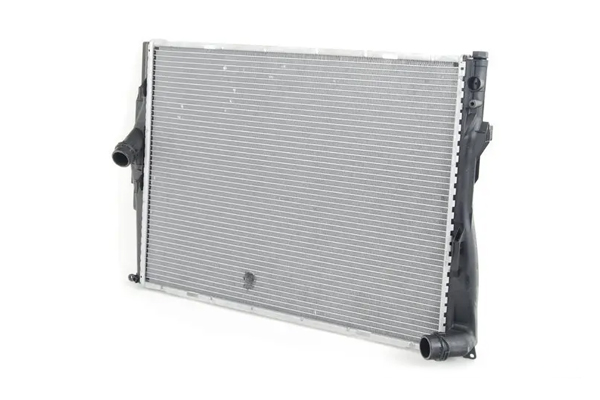
| Radiator
The radiator is basically just a big heat exchanger. It allows coolant to flow through small pipes that decrease its surface area. The result is a cooling effect on the coolant, as the smaller the surface area of a liquid, the more quickly its temperature can be changed. Radiators don’t fail often, but they can become corroded and clogged with age. This can reduce the flow rate of your coolant, which prevents cool liquid from making it to your block. Reduced flow is definitely not good, so flushing or replacing your radiator is generally recommended. Extremely aged radiators should at least be checked when conducting your coolant service. You can run distilled water through the upper inlet and see it flow out the other side. It should be steady and consistent. If it isn’t, or the water is full of chunky bits, you should go ahead and snag a new radiator.
Upgrading to an aluminum radiator is also incredibly popular among drivers looking for an improved cooling system. Larger, lighter, and more effective at cooling, upgraded radiators like those from Mishimoto or CSF help keep temperatures down in extreme driving conditions like those found on a track. This can be important if you want to stay out on the field for any duration, as running your car to the limit, surrounded by other cars, on a hot summer day can spell disaster for even a perfectly working cooling system. |
|
| | | 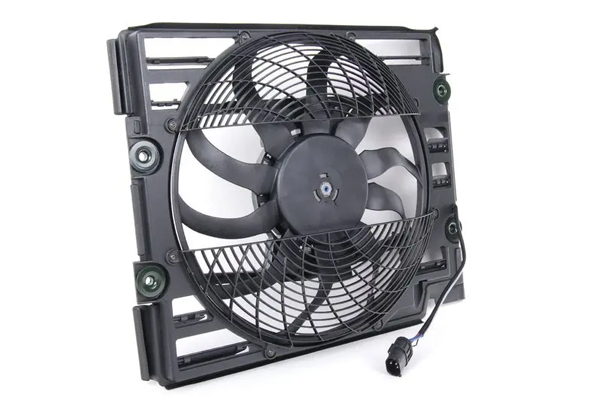
| Fan/Fan Clutch
Many older BMWs use viscous clutches and fans that spin with the engine continuously. A mechanical fan clutch has a few benefits, but also a few drawbacks. Chiefly, they are low-cost and provide cooling for the entire time your engine is running. Unfortunately, they have a tendency to go bad after a few years and their distance from the radiator means they are not as effective as they could be were they attached directly to the radiator and completely shrouded. An easy way to test if your fan clutch is in working condition is to roll up a newspaper lightly and hold it to the spinning fan. If the fan shreds the newspaper, your clutch is functioning as it should. If your newspaper stops the fan, that means it’s time for a replacement.
If you need a new fan clutch, you might as well go ahead and upgrade to an electric fan. Not only will you have better cooling efficiency, but you will have more room in the engine bay, a much lower risk of nicking your fingers (hey, I’ve done it), and greater reliability with an electric motor as opposed to an outdated clutch-type. Every competitive race car that comes to mind runs electric fans for these reasons. So, even if your fan clutch is working, it’s probably worth your time to just replace it with an electric fan that has many benefits over its mechanical counterpart. Plus, they just look cleaner in the engine bay. |
|
| | | 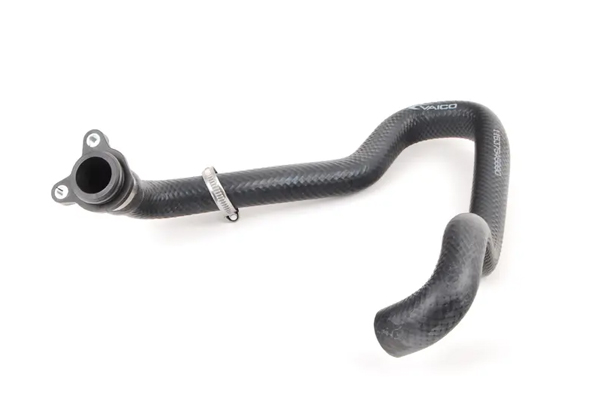
| Hoses
The coolant hoses quite obviously carry coolant to and from your radiator and heater core to the engine block. Most of these hoses will be rubber, though there are some hard lines thrown into the mix. Rubber hoses have a tendency to age poorly, and antifreeze doesn’t exactly make them happy either. Over time, those hoses become cracked, corroded, and brittle. Replacing them is essential if your BMW is getting on in years.
Additionally, upgrading to silicone hoses could be beneficial for some of you. Most people who use silicone hoses tend to go for flashy colors and do it as an aesthetic modification. However, silicone resists age and corrosion much more effectively than rubber and is incredibly durable. So there are quite a few benefits. If you are replacing your hoses anyways, using ones with a longer operational life isn’t exactly a bad choice. |
|
| | | 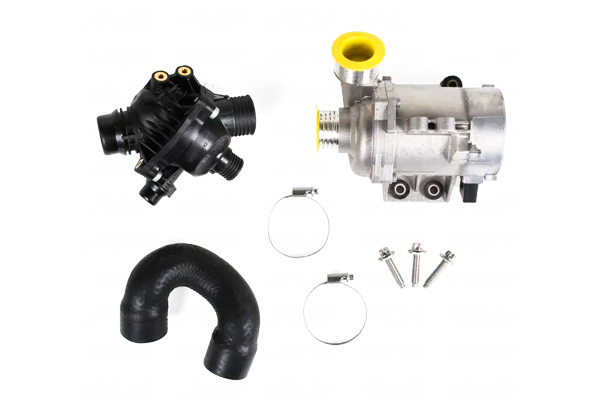
| Thermostat/Tstat Housing
Most common cooling issues are usually related to thermostat operation in that it is debatably the weakest part of the system. Thermostats should be replaced with every regularly scheduled cooling service. They fail by ideally sticking open and never closing, but they can be known to fail closed. What that means is no coolant will pass through and your engine will continue to rise in temperature. This simulates the symptoms of a blown head gasket and can actually lead to one if overheated enough. Tstats are, however, designed to fail open. This can be easily identified, especially in winter, because your car will take abnormally long to warm up to operating temperature. You can easily check if your thermostat is operational by boiling water and dropping the cold thermostat into it. If the valve springs open, your thermostat works. However, we recommend replacing your thermostat if you have taken it out anyway, so checking it should only be done to ensure that is or isn’t your cooling issue.
In heavily modified cars, or ones that spend a great deal of time on the track, using a thermostat that opens at a lower temperature can be incredibly useful. In my personal car, I use a low-temp thermostat that helps regulate temperature since it is a swapped engine running less coolant than originally intended due to space restrictions for the size of my radiator. This is just one of several reasons why using a low-temp thermostat is beneficial, but they should NEVER be used to counter an actual cooling issue. If your car is heating up under normal driving conditions, something is wrong. Don’t just throw a thermostat that opens at a lower temperature in your car to remedy that problem. That would be akin to treating a gunshot wound with gauze.
Lastly, the thermostat housing in certain engines, namely the M50, M52, S50, and S52, is made of plastic. This is a serious weak point as, over time, that plastic is corroded and weakened to a point that they often break quite easily. Replace every plastic tstat housing with a metal one. Bar-none, no exceptions, there is no reason you shouldn’t do this. |
|
| | | 
| Water Pump
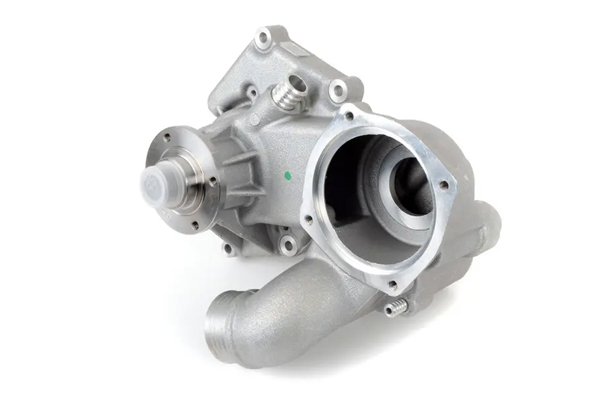
You knew it was coming. The water pump should be replaced regularly, be it a mechanically driven pump or an electric one. Generally, overheating and low coolant flow issues can be traced back to a failed or failing water pump. In belt-driven applications, they have a much lower risk of failure, but selecting a quality pump with the proper impeller is key. OE/Genuine pumps should be preferred, but there are some companies who produce incredibly high-quality units like Geba for much lower costs. Do be careful in choosing an aftermarket unit, however, as they may not function as well or for as long as OE/Genuine products, depending on the manufacturer. In newer engines, the pumps are electric and have a known failure issue that causes instant limp-home mode when they stop functioning properly. This is incredibly inconvenient for obvious reasons. Replacing the water pump at regularly scheduled intervals is essentially mandatory.
|
|
| | | 
| Reservoirs/Surge Tanks
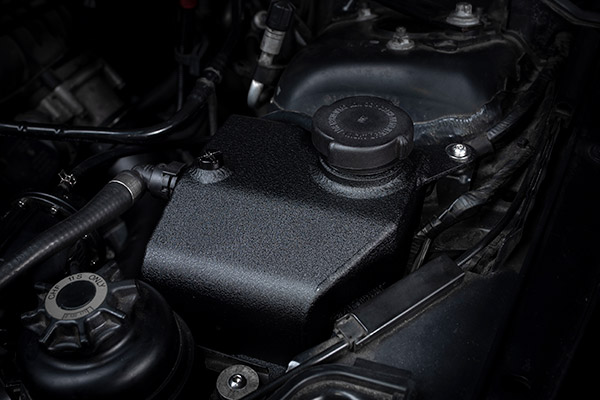
These are perhaps more common than any point of failure on a BMW, classic or modern. Some radiators will have attached surge tanks, others will have separate reservoirs, but they are all usually plastic. Once again, as they age, those plastics become brittle and easily broken. Replacing your radiator, if you have a model with an attached surge tank, takes care of that issue, but if you have an external reservoir, you may want to replace it with a cooling service. In fact, if you haven’t done so or don’t know if it has been done, we suggest that you go ahead and replace that tank when you do the hoses, radiator, thermostat, water pump, and other major cooling components to prevent any chance of wear-related failure.
|
|
| | | 
| Head Gasket
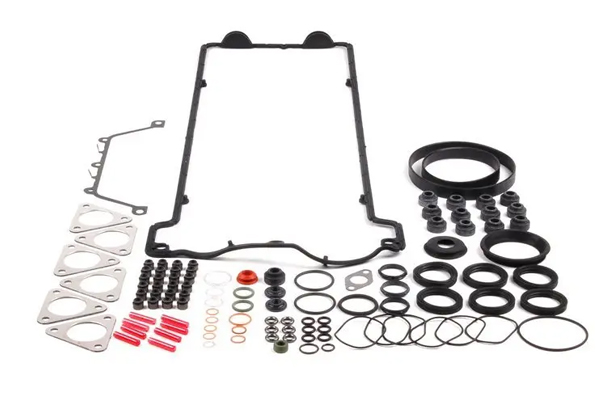
This one is a doozy. A head gasket failure is the result of repetitive overheating, age, or, in modified turbo engines, from over boosting. There are other ways these can fail, but those are the primary causes. Symptoms will be easy to spot as you will have oil and coolant mixing. This will be evident in milky, soupy, goopy coolant and frothy oil. You will have major overheating issues and lubrication issues as neither fluid are particularly effective at doing the other’s job. Replacing a head gasket is not fun, there is no way around that. Generally, if it isn’t broken, don’t fix it, but we feel that this cooling system component must be mentioned. Personally, I have only ever had one head gasket failure and it was in a very old and poorly home-built engine in a car I picked up to restore. With the engine torn down, it was an easy fix. I have also seen them fail as a result of lack of use for extended periods of time, like engines left dry in a field for years. If you see milk in your coolant and have rampant overheating problems, it’s time for a new head gasket. If you don’t, we suggest leaving it in place unless you feel like you just absolutely want to replace it.
Upgrading to a Multi-Layer Gasket (often referred to as “MLS Gasket”) is essential if you plan on slapping a turbo to your engine or going for big power. Cometic has several options, but remember, thickening that gasket will lower compression slightly, so only ‘upgrade’ to this style of gasket if you absolutely need it to prevent it being blown out by high boost.
|
|
| | | 
| Heater Core
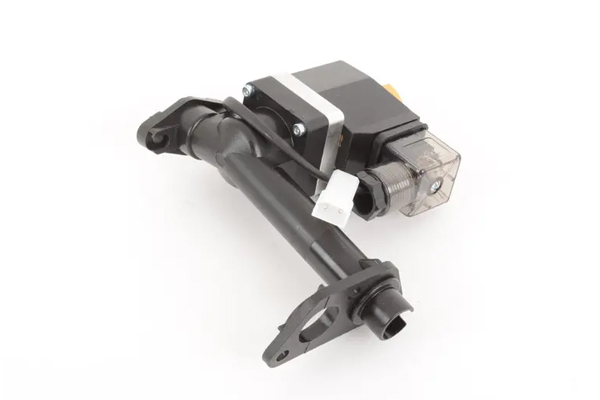
While not as involved as a head gasket, the heater core is still no fun to replace. If you have low coolant flow, no heat in your cabin, and potentially a slight overheating issue, the heater core is likely the culprit. Replacing the o-rings on the inlet and outlet pipes are recommended with a heater core replacement as well since they have a tendency to break and cause leaking into your carpet. Having replaced several myself, mostly in E30s, I can speak confidently that these are often the last thing you think of when it comes to the cooling system but sometimes the missing piece to a full cooling system overhaul puzzle. Of course, you shouldn’t have to replace it under normal circumstances, but since they have a possibility of failing in multiple ways, we felt it important to mention at the least.
|
|
| | | Miscellaneous
Temperature sensors and wiring are about the only other things you need to worry about, but only if they are already broken. These do not fail, at least not traditionally, very often, but replacing temp sensors with your service is probably a good practice. Since they send the signal to your gauge cluster and computer, these sensors need to function properly in order for you to see the correct information.
With these parts, all replaced and/or upgraded, your BMW should be happy to keep you on the road for a long time, at least, without cooling troubles. Staying ahead of these problems can help your engine live out its intended operational life and also prevent any major failures, like a head gasket, excessive engine wear, and other problems that can lead to much more expensive repairs. Remember, if you take care of your BMW, it will certainly take care of you. Here at Turner Motorsport, we like to help make it as easy as possible for you. Naturally, we have put together full-service kits of varying levels of involvement that will make your next cooling service as painless as possible. Not having to worry about getting all the parts you need, or the right parts takes a big hurdle from the equation. That’s why we have fully assembled kits ready for you to tackle that next cooling service maintenance with confidence! Now go out there and keep your BMW happy and healthy!
|
|
| | | | - - - - - - SUGGESTED ARTICLES - - - - - - |
|
| | Turner Short Shifters |
|
| | |