-
Home
-
Turner Performance Clutch Upgrades
BMW Performance Clutch Upgrades
For those of you with manual transmissions, the clutch and flywheel assembly is the heart of your torque delivery past the engine. Many drivers are aware that the clutch assembly has a lifespan and it will eventually need to be replaced. What we have found to be less universally known is how to determine the correct clutch and flywheel capabilities for your driving needs that will perform the way you want. This article will help you understand why the clutch is needed, how it functions, and what you need to know in order to choose the right replacement or upgrade for your BMW.
Before you start searching for parts, it is important to know what is actually happening inside the bell-housing of your transmission.
The Purpose of a Flywheel
The flywheel is mated to the engine and it spins with the rotation of the crankshaft. The flywheel provides a friction surface that meets with the friction surface of the clutch that, when engaged, allows the rotation of the engine to be carried through the driveline to the wheels. The flywheel is essentially a heavy wheel which requires a lot of force to rotate, so it will also require a lot of force to slow down. Let’s keep this idea in mind when we talk about performance flywheels later on, and how the weight of the flywheel will affect engine operation and shifting.
The Purpose of a Clutch
The main purpose of the clutch is to separate the engine from the transmission when shifting gears or sitting still, this occurs when the clutch is disengaged. The secondary purpose of the clutch is to connect the engine to the transmission and transmit power down the driveline, this occurs when the clutch is engaged.
The Anatomy of a Clutch
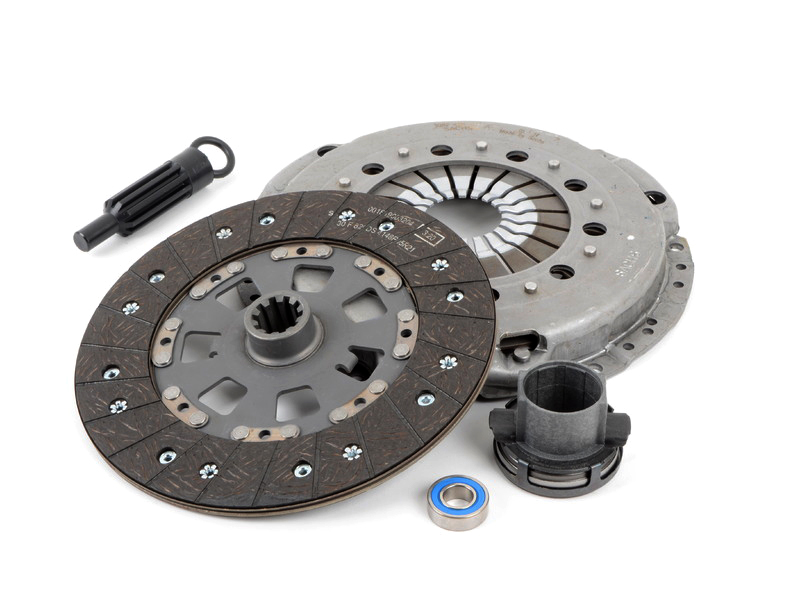
The clutch assembly is made up of two parts: the pressure plate and the clutch disc. The pressure plate is bolted to the flywheel and rotates with the engine. The clutch disc is installed between the pressure plate and the flywheel, but is connected directly to the input shaft on the transmission. The clutch disc features friction material on either side which mates up against the surfaces of the pressure plate and flywheel.
Dual-Mass Flywheels
Choosing a flywheel for your car is a straightforward process. If you have an entirely stock BMW that has a dual-mass flywheel and intend to keep the car unmodified, replacing your flywheel with a dual mass is perfectly fine. Dual-mass flywheels offer vibration damping and prevent any unwanted chatter, or gear rollover, that might annoy a driver looking for a comfortable and quiet ride.
SHOP OEM BMW Clutches
Single-Mass Flywheels
If your BMW is modified or you want a more durable, less expensive, and generally lighter weight flywheel, a single mass conversion is the best choice. Single-mass flywheels are just a friction surface that provides continuous rotation the same as a dual-mass, but does not damper vibrations. You will experience gear-rollover noise and vibration, but the benefits are usually preferred over the minimal noise for performance-oriented drivers.
Lightweight Flywheels
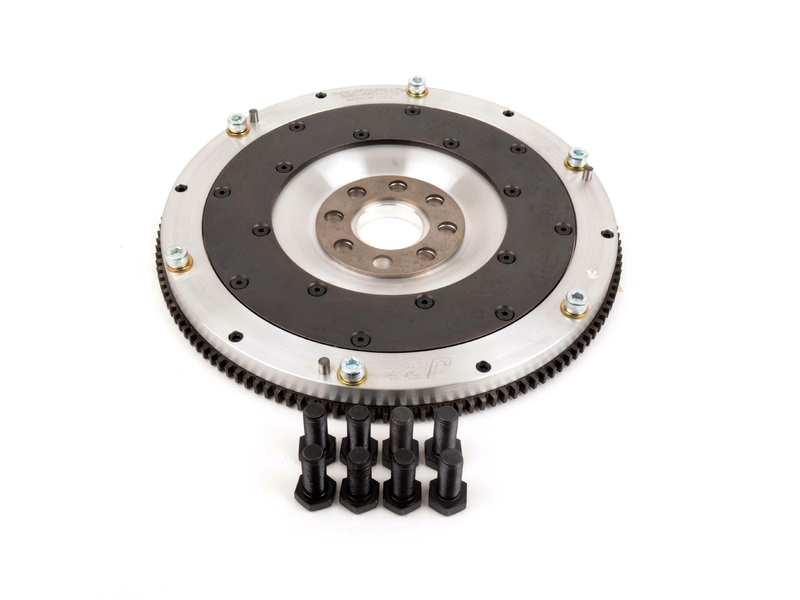
If you are looking to improve your acceleration and throttle response by freeing up power, a lightweight flywheel is an excellent step to reaching that goal. The concept of a lightweight flywheel is simple: reduce the weight, reduce the rotational inertia, and benefit from the extra torque and horsepower. The lighter weight aluminum single-mass flywheels offer drastically improved throttle response versus stock and are capable of handling more power. These are used in all types of racing, but can be easily driven on the street.
SHOP BMW Lightweight Aluminum Flywheel Upgrades
Upgrading Clutches
If your BMW is producing more horsepower and torque than it did from the factory, you will inevitably need a clutch system capable of delivering all that extra power to the wheels. Clutches with higher torque-capacity are going to be more ‘grabby’ and can sometimes have a heavier pedal feel than the stock clutch. Street drivability for each clutch type is going to generally be up to the discretion of the driver, but the horsepower/torque rating of the clutch should exceed the power level of your modified BMW.
Sprung Versus Unsprung
A sprung clutch has a softer feel because it has springs that resist the grabbiness of the engagement. An unsprung clutch is very immediate in its engagement. The more commonly seen sprung clutches use their springs to absorb vibration and damper excessive shock before transmitting power. With an unsprung clutch, the power is immediate, but there is nothing to prevent the shock of that instant engagement from traveling through the driveline. This makes them incredibly beneficial in competitive use, but less than ideal for street use due to their lack of comfort and touchy engagement.
Full-Face Style
From the factory, BMW uses full-face clutch discs that offer quiet operation and easy engagement. The 'full-face' design is self-explanatory: the clutch disc friction surface is a full disc shape and the entire surface is the friction surface. These do not offer enough bite for high-horsepower cars, but are the most comfortable to drive on the street.
Puck Style
Puck-type clutch discs are not actually a full disc, but a 'star' pattern with friction surfaces on the 'points' of the star. These friction surfaces are more capable and have a higher torque capacity. Since they have less rotating mass, they are a lighter weight and provide excellent performance in competition use. Their lighter weight makes for faster shifts and less work for the synchros in your transmission, but they tend to be extremely grabby and noisier than OEM clutch options. Puck clutches actually have less friction surface than a full-face disc due to their design, but they are capable of higher clamp loads. This means they do not last as long as full-face clutches and for this reason are not advisable in a daily-driven car.
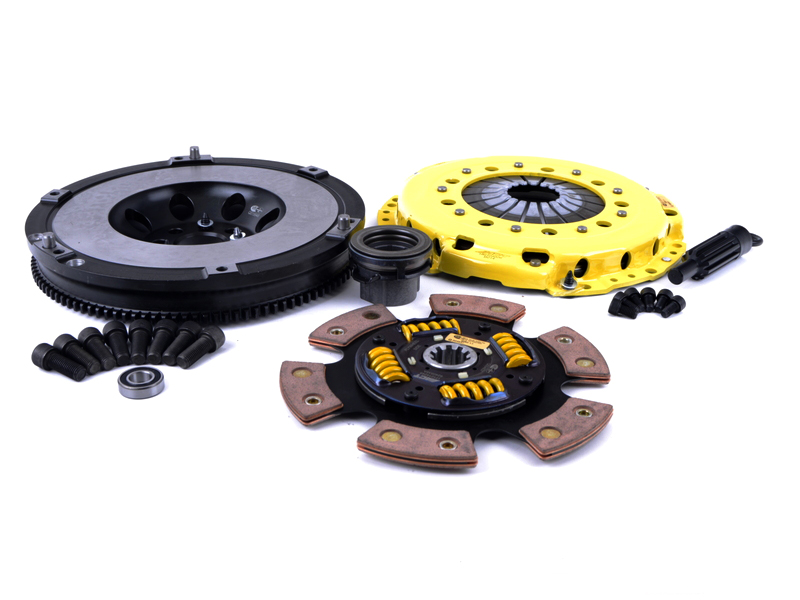
Multi-Disc
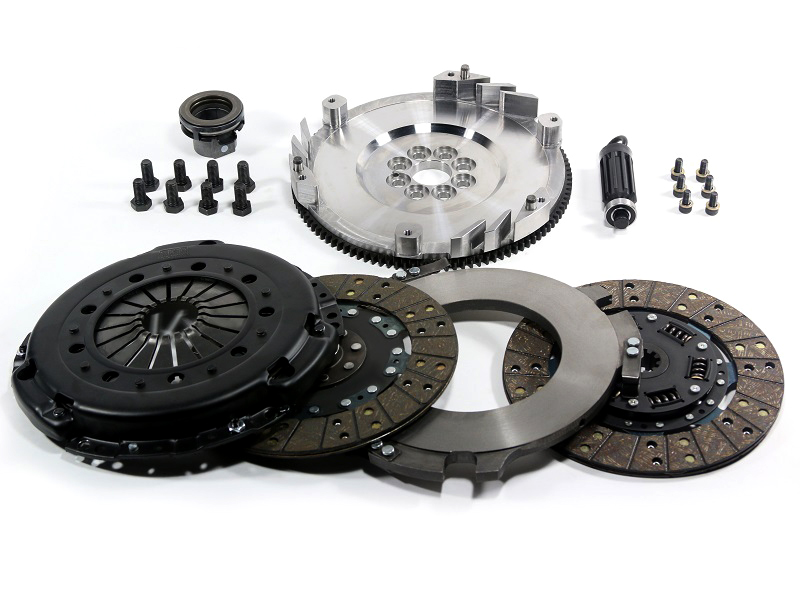
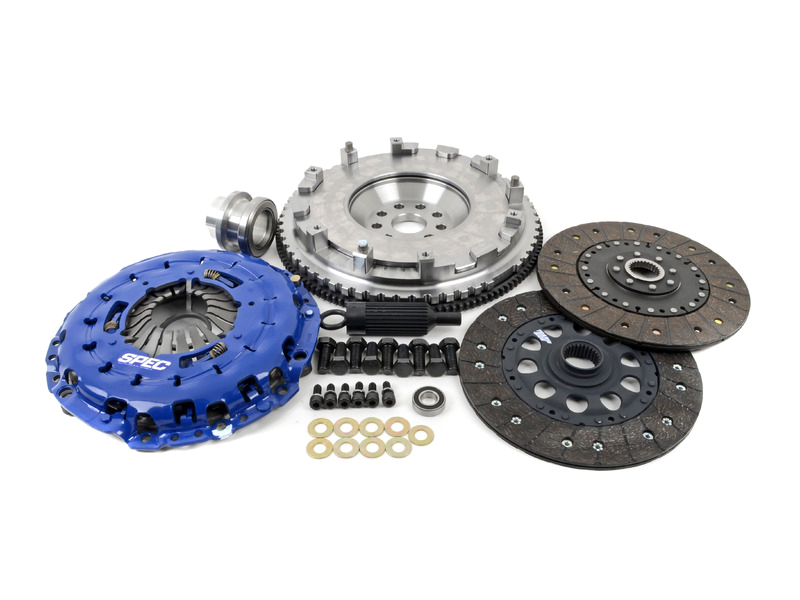
Multi-disc clutches have multiple friction discs that stack inside the assembly. These clutch types are used in high-horsepower applications for their ability to effectively double the amount of torque-load capable of being handled by the clutch assembly without changing the pedal feel. Multi-disc clutches are generally smaller than puck or full-face single disc clutches because they can transmit more torque from a smaller package. These are not preferred on most street cars for their grabby nature, but can be used without much sacrifice to ease and comfort.
SHOP BMW Performance Clutch Upgrades
Stainless Steel Clutch Line
If you’re looking for better clutch pedal feel a braided stainless steel clutch line should be included in your next clutch job. This line adds a firmer pedal feel that makes the pedal travel more engaging and sharpens up where you feel engagement.
SHOP BMW Stainless Steel Clutch Lines
Brass Pivot Pin
Additionally, a Brass Pivot Pin is a must-have when you go to replace or upgrade your clutch. The factory-equipped plastic pivot pin wears down over time and affects the pedal feel. With the brass pin, your clutch pedal will retain its engagement feel indefinitely and will not require you to replace the pin as you would with the plastic OEM pin.
SHOP BMW Brass Pivot Pin
Adjustable Clutch Pedal Stop
Finally, for newer BMWs, an Adjustable Clutch Pedal Stop is a simple modification that can be installed in seconds to provide sharper shifting and improved pedal feel. The adjustable stop allows you to shorten the stroke of your clutch pedal to just past the point of clutch engagement, improving your shifts by eliminating that ‘dead space’ that does not serve a purpose. This significantly improves your shift times and takes the guesswork out of feeling for a less than noticeable engagement point.
SHOP Adjustable Clutch Pedal Stop
Ideally, all modified BMWs have a clutch that is rated above their horsepower and torque outputs to fully take advantage of their engine’s output and a lightweight flywheel to improve durability and responsiveness. These upgrades for your BMW serve a mechanical function that is necessary to the drivability of the car; they also add a more connected driving feel for a better overall experience. Our upgraded clutches, flywheels, clutch lines, and accessory parts will help your BMW deliver torque properly and our OEM replacement options will keep your stock BMW driving like it did when it was new. Make sure to complete your next clutch service or upgrade with our recommended products to get the best performance from your BMW.
SHOP BMW Clutches