One of the most defining features of a performance BMW is the distinctive straight-six or small block V8 rasp, especially when amplified through a less restrictive exhaust. Will Turner himself notes an early memory on the track being passed by an E30 M3 making a vicious snarl as it rocketed past. Performance exhausts are more than just a way to make your BMW sound more aggressive, a better flowing exhaust will improve your engine’s ability to breathe and free up horsepower. In order to better understand what performance exhaust does for your engine, we will explore key features of the exhaust, the effect of air pressure, and how to balance the proper velocity and volume for your new exhaust to provide maximum benefits.
As your engine burns the air and fuel mixture which is injected into the cylinders, it needs to be able to expel these combustion gasses to make room for fresh air and fuel to ignite. Exhaust gasses are pushed out of the cylinder when the exhaust valve is opened, they are then carried through the exhaust pipes away from the engine and toward the rear of the vehicle.
Inside the exhaust, the combustion gasses that are expelled are forced out of the engine by the piston travel at a rate of flow that is determined by the exhaust pipe diameter. The diameter can either be too restrictive, causing a high velocity but low rate of flow or too open, causing low velocity but the high rate of flow. Commonly, people will refer to the release of back pressure as a way to increase performance, but that some back pressure is needed in order to be most effective. This is not entirely true, as back pressure is slightly different than what causes performance loss from the exhaust that is too large for the engine.
Back Pressure
Back pressure is the resistance of natural atmospheric pressure (1 atm) that exists all around us. The natural air pressure passively resists the expulsion of exhaust gases and must be overcome by the pressure of exhaust gas as it is expelled. Imagine that you were running a marathon and could inhale normally, but had trouble exhaling, that would certainly have an effect on how fast or far you could run. Your engine needs to be able to “breathe” in the same way, restrictions on the intake or exhaust systems can have adverse effects on overall performance.
Too little pressure from the exhaust gasses being expelled causes the engine to work harder to push all the gas out. A loss in performance occurs as a result since the engine is devoting some of its power to pushing out that exhaust gas. A completely unrestricted exhaust with pipe diameters that are too large for the car will reduce the velocity of gases being expelled, which has a similar effect to the car’s performance. It should be noted, however, that while the results are similar losses in power output, the causes are slightly different. The exhaust gas is expelled slowly because of something is known as the Venturi effect. It works similar to diffusion; moving from a high concentration gradient to a low concentration gradient increases the velocity but decreases the rate of flow. Inversely, increasing the diameter reduces the pressure of the exhaust gasses and slows their escape.
Choosing the right Exhaust
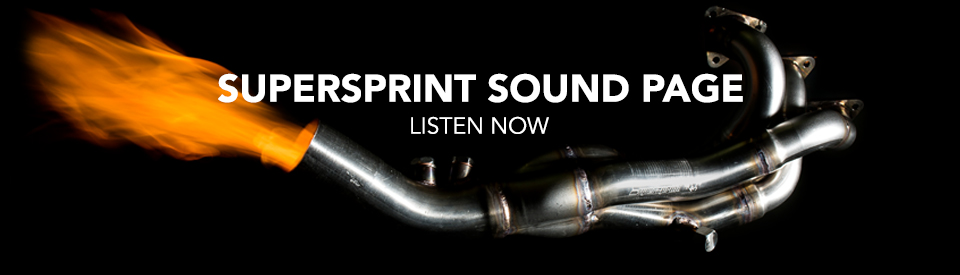
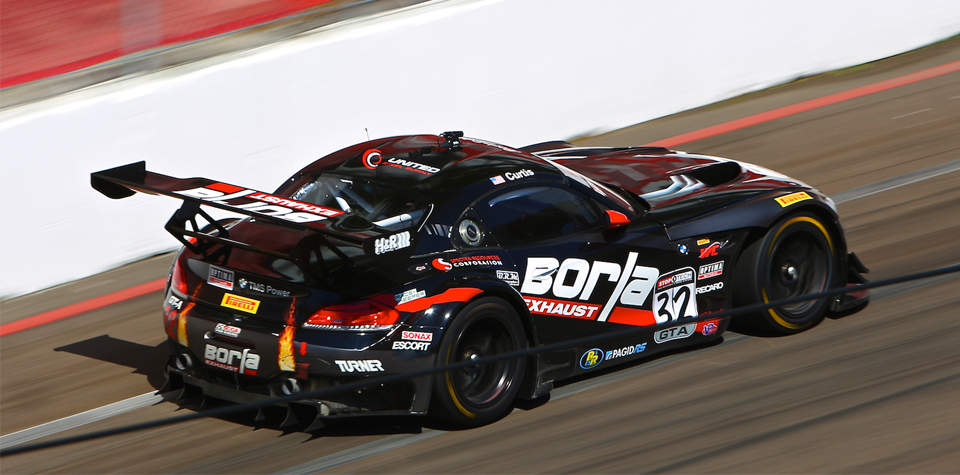
Finding the right exhaust for your BMW is easy. Many companies, like Supersprint, Akrapovic, Borla, and even us here at Turner Motorsport, produce exhaust systems specifically tuned for the proper performance for your BMW. The easy way to find the right exhaust, were you to make your own, would be to simply look at your factory exhaust. While adding a performance exhaust improves the sound of your BMW, if it is a bone-stock engine producing the factory horsepower, you may not see the benefits you were hoping for besides an increase in sound. The factory exhaust is designed to provide the perfect balance between the rate of flow and velocity for an unmodified engine. When you begin to increase the performance of your car, the exhaust becomes more critical to modify as well. By dividing the total area of your factory exhaust by your new exhaust, you are left with the percent difference in areas which is the percent difference in engine horsepower capabilities.
With a complete system of headers, downpipes, high-flow catalytic converters, and cat-back exhaust, your BMW can greatly benefit from the improved exhaust flow. Tuning companies we support provide the right exhaust systems for your BMW to produce more power and generate a heartier sound while also providing significant weight savings. By reducing the restrictions in your exhaust, you are freeing up engine power to the wheels while also removing some of the weight the car needs to overcome in its acceleration.
Create an account to be able to build Wish Lists.